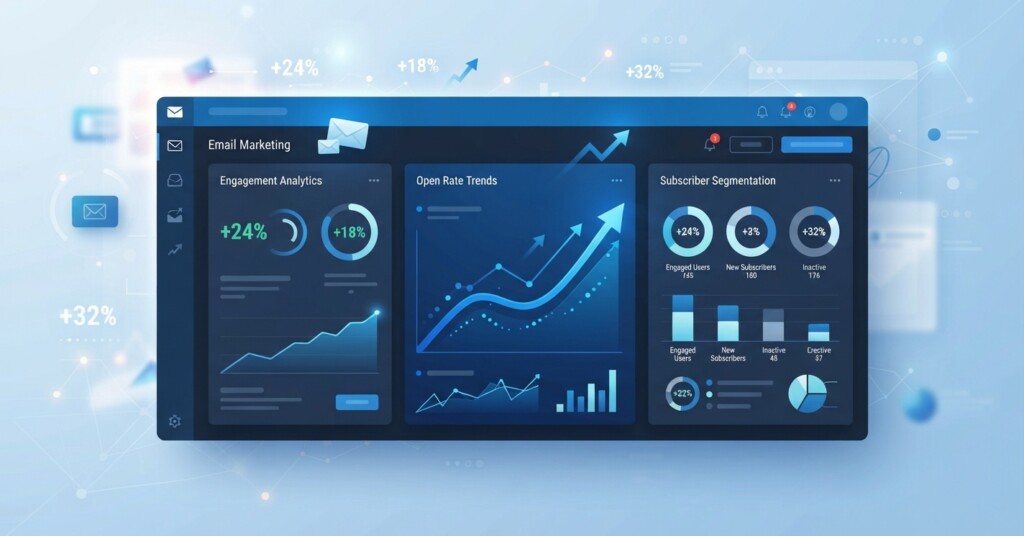
Every email list has a graveyard of subscribers who no longer open, click, or care. Before you hit delete on those contacts, a well-built win-back email campaign can revive a surprising number of them—often 10 to 15 percent—and give you a clear, data-backed reason to remove the rest. This article walks through how to identify inactive subscribers, build a win-back sequence that actually works, what to say to people who have checked out, and when it is finally time to let them go. By the end, you will have a practical framework you can apply to your own list this week.
Why Inactive Subscribers Hurt More Than You Think
It is tempting to think a bigger list is always better. It is not. Inactive subscribers—people who have not engaged in 90, 180, or 365 days, depending on your sending frequency—quietly damage your email program in three ways. First, they drag down your engagement rates, which makes your campaigns look worse than they are when you report results to stakeholders. Second, major mailbox providers like Gmail, Yahoo, and Outlook track engagement signals closely; a list full of people who consistently ignore your emails tells those providers your content is unwanted, which can tank deliverability for your entire list, including your most engaged subscribers. Third, if you are paying per-contact for your email service provider, dead weight is costing you money every single month.
A win-back campaign solves all three problems at once. It gives disengaged subscribers one last, deliberate chance to re-engage, and it gives you clean data to justify removing the ones who do not respond.
Step One: Define What ‘Inactive’ Actually Means for Your List
Before you write a single win-back email, you need a clear, documented definition of inactivity. This varies by business model and cadence. A daily news publisher might consider someone inactive after 30 to 60 days of zero engagement. A B2B software company sending monthly newsletters might wait 180 days. There is no universal number, but there is a reliable method: look at your typical sending frequency and sales cycle, establishing an inactivity window (commonly 60 to 180 days, or several send cycles for lower-frequency senders) where silence indicates true disinterest.
- Pull engagement data for the last 6 to 12 months, including clicks, website sessions, and purchases alongside opens (noting that features like Apple Mail Privacy Protection can artificially inflate open data).
- Segment subscribers by last engagement date rather than subscription date.
- Separate ‘never engaged’ subscribers (never opened or clicked a single email) from ‘previously engaged, now dormant’ subscribers—these groups need different messaging.
- Exclude anyone who has purchased or converted recently, even if their email engagement is low, since commercial behavior often matters more than email metrics.
- Set your inactivity threshold in writing so future campaigns use a consistent standard.
Never-engaged subscribers who signed up more than 12 months ago and have never interacted with a single email are usually not worth a win-back attempt. They are more likely fake signups, typos, or spam traps. Send them straight to a suppression or removal list instead of wasting campaign deliverability on them.
Building the Win-Back Sequence: Structure and Timing
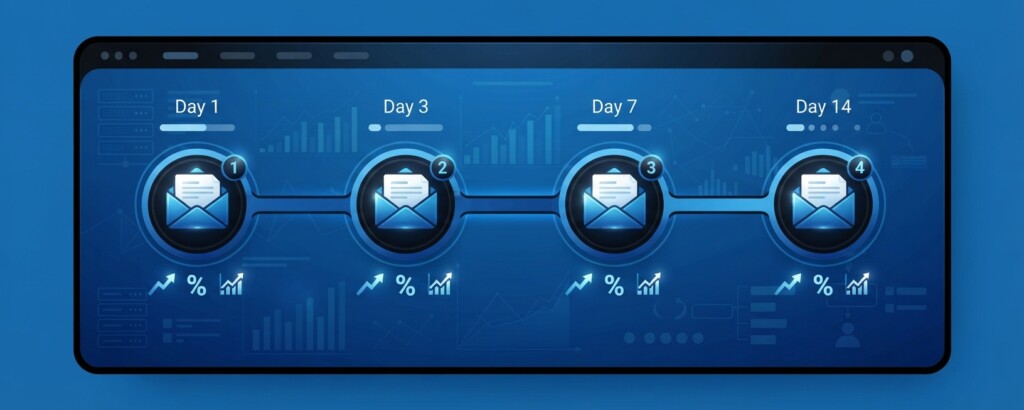
A win-back campaign is not one email—it is a short sequence, typically three to four emails spaced over two to three weeks. Each email should have a distinct job. Sending the same generic ‘we miss you’ message once and giving up is the most common reason win-back campaigns underperform.
| Timing | Goal | Tone | |
|---|---|---|---|
| Email 1: The Check-In | Day 0 | Remind them who you are and ask if they still want to hear from you | Friendly, low-pressure |
| Email 2: The Value Reminder | Day 4–5 | Show what they have been missing—top content, product updates, results | Helpful, specific |
| Email 3: The Incentive | Day 9–10 | Offer a discount, free resource, or exclusive content to prompt action | Direct, time-bound |
| Email 4: The Goodbye | Day 14–16 | Give a final deadline before removal from the list | Honest, no guilt-tripping |
Each email in the sequence should include a single, obvious call to action. Do not ask subscribers to update preferences, confirm their email, and browse a sale all in one message—that is too many decisions for someone who has already mentally checked out. One email, one ask.
What to Say: Subject Lines and Messaging That Actually Work
The subject line carries almost all the weight in a win-back email because your goal is simply to get opened by someone who has stopped opening. Curiosity and directness tend to outperform cleverness here. ‘Still want to hear from us?’ consistently beats vague lines like ‘Checking in’ because it names the actual situation and invites a yes-or-no decision, which lowers the mental cost of engaging.
Inside the email, acknowledge the gap honestly instead of pretending nothing happened. A SaaS company might write: ‘We noticed you have not opened our emails in a while, and we would rather send you nothing than send you content you do not want.’ This kind of transparency builds trust and often performs better than apologetic or overly promotional copy.
For the incentive email, match the offer to your business model. An ecommerce brand might offer 15 percent off the next order. A content or media business might unlock a gated guide or a free month of premium content. A B2B company might offer a short strategy call or a report that solves a specific problem for that audience segment. The incentive should feel proportional—overly aggressive discounts can train subscribers to go dormant on purpose, waiting for the next win-back offer.
Avoid guilt-based or manipulative language like ‘We’re sad to see you go’ paired with countdown timers and urgency stacking. Subscribers who are already disengaged respond to pressure tactics by unsubscribing or marking the email as spam, which hurts your sender reputation far more than a quiet unsubscribe would.
Segmenting Responses and Cleaning Your List
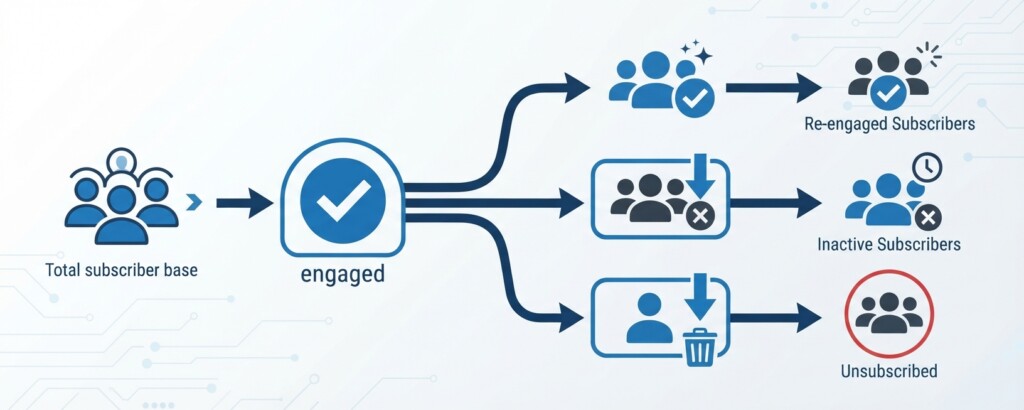
Once your win-back sequence runs its course, you will end up with three distinct groups, and each needs a different next step. The re-engaged group—anyone who opened, clicked, or purchased during the sequence—should be moved back into your regular sending list and tagged so you can track whether they stay active over the following months. The unsubscribed group has made their preference clear and should simply be removed; do not attempt to win them back twice.
The third group—the silent majority who did not open or click any of the win-back emails—is where the real decision happens. This is the point where most marketers hesitate because deleting subscribers feels like losing an asset. In reality, keeping them is the actual loss. For instance, removing roughly 18,000 silent contacts from a 50,000-person list with an initial 14 percent open rate (7,000 opens) mathematically lifts the baseline open rate to nearly 22 percent immediately on the remaining 32,000 subscribers, with rates often climbing beyond 30 percent over subsequent weeks as mailbox providers recognize the cleaner engagement and route more emails directly to the primary inbox.
| Subscriber Response | Action | Where They Go Next |
|---|---|---|
| Opened or clicked a win-back email | Re-engage | Back into regular active list, tagged for monitoring |
| Made a purchase during sequence | Re-engage + reward | Active list, consider a small thank-you offer |
| Unsubscribed | Respect the choice | Removed immediately, no further contact |
| No response to any win-back email | Suppress or delete | Removed from active sending list after 30-day grace period |
Give the ‘no response’ group a 30-day grace period before full deletion, especially if you store historical purchase or behavioral data elsewhere. This protects against accidentally removing someone who was simply on vacation or dealing with a full inbox during your campaign window.
Real-World Example: A Small Retailer’s Win-Back Results
A small home goods retailer with a 22,000-person list noticed their email revenue had been flat for two quarters despite steady traffic. An audit showed that 9,000 of those subscribers had not opened an email in over nine months. They ran a four-email win-back sequence offering a check-in message, a ‘best of’ product roundup, a 20 percent discount code, and a final goodbye notice.
Results after three weeks: 1,340 subscribers re-engaged (opened or clicked), 310 of those made a purchase using the discount code, 640 unsubscribed outright, and the remaining 7,050 were moved to a suppression list after the grace period. The retailer’s next regular campaign saw open rates climb from 11 percent to 24 percent, and because the sending list was now smaller and more engaged, their email service provider costs actually dropped despite the campaign generating new revenue. The lesson is straightforward: a smaller, engaged list consistently outperforms a larger, stale one.
Key Takeaways
- Define inactivity clearly based on your sending frequency and conversion cycle, not an arbitrary industry number.
- Build a three-to-four email win-back sequence with a distinct goal for each message, rather than a single one-off email.
- Use honest, direct subject lines and copy—acknowledge the gap instead of ignoring it.
- Match your incentive to your business model and avoid guilt-based urgency tactics.
- Segment responses after the campaign ends and commit to removing the truly unresponsive group.
- Treat list cleaning as a revenue and deliverability strategy, not a loss of assets.
Win-back email campaigns are not about rescuing every subscriber—they are about giving disengaged contacts a fair, well-timed chance to come back, and using the results to make a confident, data-backed decision about who stays on your list. Run this process quarterly or twice a year, and you will keep your list healthier, your deliverability stronger, and your email metrics honest.
Want help designing your next win-back sequence?
If you are ready to clean up your list and build an email program that performs, explore more practical guides on email marketing strategy and automation.