Most ecommerce stores lose more revenue to abandoned carts than they make from their entire paid ad budget. The average cart abandonment rate hovers around 70 percent, meaning that for every ten shoppers who add something to their cart, seven leave without buying. Abandoned cart and post-purchase email sequences are two of the highest-ROI tools available to recover that lost revenue and turn one-time buyers into repeat customers. This article walks through how both sequences work, why they matter, and how to build ones that actually convert.
Why Abandoned Cart Emails Matter So Much
An abandoned cart happens when a shopper adds a product to their cart but leaves the site before completing checkout. This is not necessarily a lost sale. Many shoppers abandon carts because of distraction, unexpected shipping costs, a need to compare prices, or simple hesitation. They are not rejecting the product outright; they are pausing. That pause is exactly where a well-timed email sequence can step in and finish the job the website alone could not.
Abandoned cart emails consistently rank among the highest-converting automated campaigns in ecommerce. Open rates for these emails often exceed 40 percent, and click-through rates can be two to three times higher than standard promotional emails, because the recipient has already shown clear purchase intent. The message is not cold outreach. It is a reminder to someone who was one click away from buying.
A single, well-built abandoned cart sequence can recover between 5 and 15 percent of otherwise lost sales. If your store sees significant cart abandonment and has no recovery emails in place, this is one of the fastest wins available in ecommerce marketing.
Building an Abandoned Cart Sequence That Converts
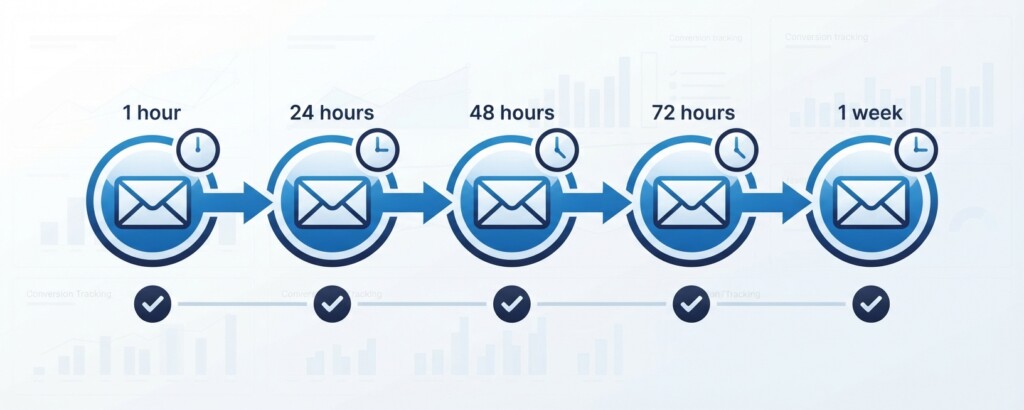
A single abandoned cart email is better than nothing, but a sequence of two to four emails spaced over several days typically outperforms a one-off reminder. Each email in the sequence should serve a distinct purpose rather than simply repeating the same message with a different subject line.
- Email 1 (1 hour after abandonment): A simple, friendly reminder showing the exact product left in the cart, with a clear link back to checkout. No discount yet — many shoppers simply forgot or got distracted.
- Email 2 (24 hours later): Reinforce value. Add product reviews, a size or usage guide, or answer a common objection such as shipping cost or return policy.
- Email 3 (48 to 72 hours later): Introduce urgency or a small incentive, such as limited stock messaging or a modest discount, to push hesitant shoppers over the line.
- Email 4 (optional, 5 to 7 days later): A final reminder framed as a last chance, sometimes paired with a slightly larger incentive for high-value carts.
The timing matters as much as the content. Sending the first email too late, after the shopper has already purchased elsewhere, wastes the opportunity. Sending every email with a discount trains customers to always abandon their cart and wait for a coupon, which erodes margin over time. Reserve discounts for the later emails and only when necessary to recover the sale.
| Timing | Primary Goal | Example Subject Line | |
|---|---|---|---|
| Reminder | 1 hour | Recapture attention | You left something in your cart |
| Value reinforcement | 24 hours | Overcome hesitation | Still thinking it over? Here is why customers love this |
| Incentive | 48–72 hours | Drive decision | 10% off if you complete your order today |
| Final notice | 5–7 days | Last chance urgency | Your cart expires soon |
Post-Purchase Sequences: Turning Buyers Into Repeat Customers
Post-purchase email sequences pick up right where abandoned cart sequences leave off, except the goal shifts from recovering a sale to building a relationship. Acquiring a new customer typically costs five to seven times more than retaining an existing one, which makes the post-purchase period one of the most valuable — and most neglected — stages in the customer lifecycle.
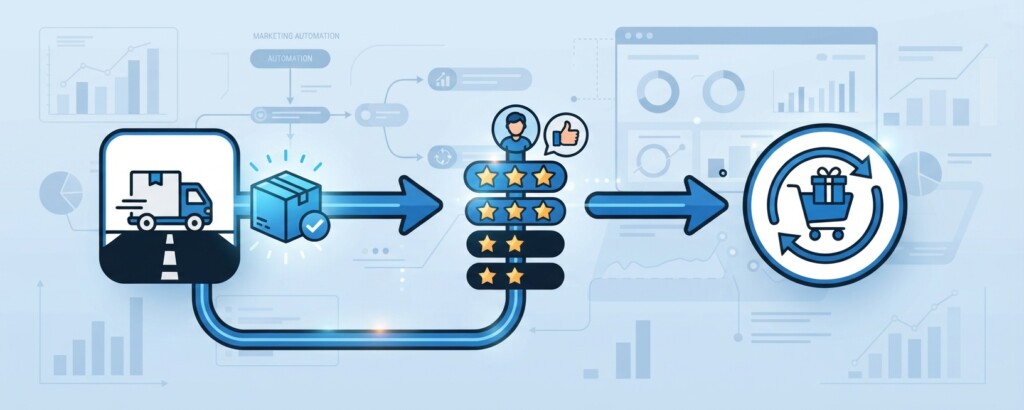
A strong post-purchase sequence typically includes an order confirmation, a shipping update, a check-in once the product has likely arrived, a review request, and eventually a replenishment or cross-sell email timed to the product’s typical usage cycle. Each of these touchpoints builds trust and gives the brand a natural reason to stay in the customer’s inbox without feeling like a hard sell.
- Order confirmation (immediate): Confirms the purchase and sets expectations for delivery.
- Shipping and delivery update (as it happens): Reduces anxiety and support tickets by keeping the customer informed.
- Delight and education email (3–5 days after delivery): Offers usage tips, styling ideas, or setup guidance to increase satisfaction and reduce returns.
- Review request (7–14 days after delivery): Asks for feedback or a rating while the experience is still fresh.
- Replenishment or cross-sell (timed to product lifecycle): Suggests a reorder or complementary product based on expected usage.
A skincare brand selling a 30-day supply of moisturizer, for example, might send a replenishment reminder around day 25, anticipating the customer is close to running out. A coffee subscription company might instead cross-sell a grinder or mug after the second order, once the customer has demonstrated ongoing interest.
Personalization and Segmentation Make the Difference
Generic, one-size-fits-all sequences leave revenue on the table. Segmenting by cart value, product category, and customer history allows each message to feel relevant rather than automated. A customer abandoning a 200 dollar cart deserves a different approach than one abandoning a 20 dollar cart — the former might warrant a personal touch or a slightly stronger incentive, given the higher potential return.
First-time buyers and repeat customers also need different post-purchase treatment. A first-time buyer benefits from onboarding content that builds confidence in the brand, while a repeat customer can move faster into loyalty or referral messaging, since trust has already been established.
Avoid over-personalizing in ways that feel invasive. Referencing a browsing session or cart contents is expected and helpful, but referencing unrelated behavioral data — such as location tracking beyond what is needed for shipping — can make customers uncomfortable and damage trust rather than build it.
| Monthly site visitors who add to cart | 5,000 |
| Cart abandonment rate (70%) | 3,500 abandoned carts |
| Recovery rate from email sequence (10%) | 350 recovered carts |
| Average order value | $60 |
| Recovered monthly revenue | $21,000 |
That calculation illustrates why abandoned cart sequences deserve priority even for smaller stores. A modest 10 percent recovery rate on a mid-sized traffic volume can translate into a meaningful, recurring monthly revenue stream, often with minimal ongoing effort once the sequence is set up and tested.
Review your abandoned cart and post-purchase sequences quarterly. Product mixes change, shipping times shift, and what worked last year may feel outdated or irrelevant to current customers.
Key Takeaways
Abandoned cart and post-purchase email sequences are not optional extras for ecommerce brands — they are foundational revenue-recovery and retention tools. A thoughtfully timed abandoned cart sequence meets shoppers at the exact moment of hesitation, while a well-structured post-purchase sequence turns a single transaction into an ongoing relationship. Together, they address both sides of the customer journey: getting the sale across the finish line and keeping the customer coming back.
Start simple if you are building these sequences for the first time. A three-email abandoned cart sequence and a five-touch post-purchase flow cover the essentials without requiring a complex tech stack. Measure open rates, click-through rates, and recovered revenue monthly, then refine timing, subject lines, and incentives based on what the data shows. Small, consistent improvements to these sequences compound significantly over time.
Want to build email sequences that actually recover revenue?
Explore more practical guides on ecommerce email marketing, automation, and customer retention strategy to keep growing your skills.