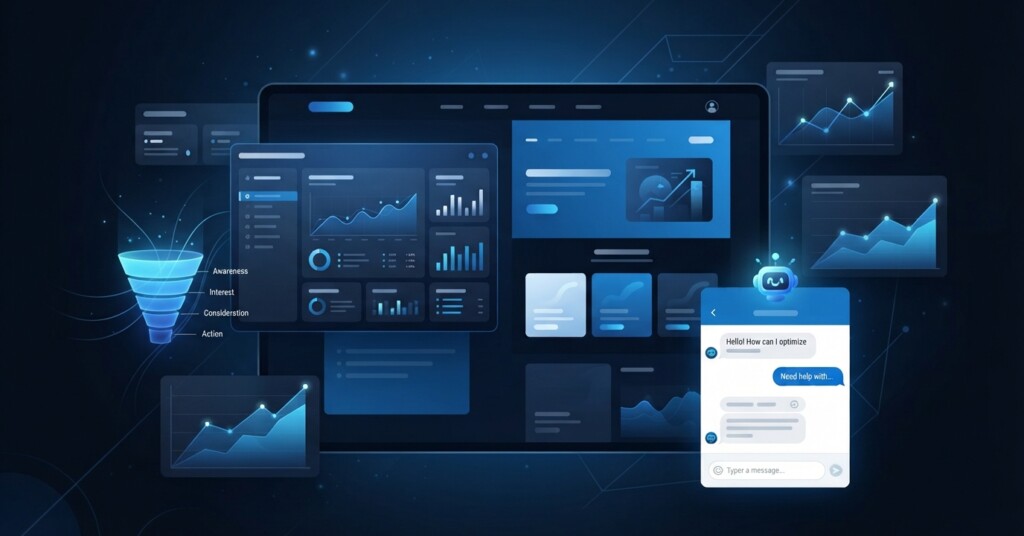
A visitor lands on your site, reads a page, and leaves without filling out a form. That happens thousands of times a day across most business websites. AI chatbots for lead generation exist to catch that moment — engaging visitors while they are still interested, asking the right questions, and routing qualified leads to your sales team before they disappear. This article walks through how to design conversational flows that actually qualify and convert, not just collect names and email addresses that go nowhere.
By the end, you will understand how to structure a chatbot conversation like a mini sales process, which questions separate real buyers from browsers, where chatbots fit alongside forms and live chat, and how to avoid the common mistakes that make bots feel robotic and push visitors away instead of pulling them in.
Why AI Chatbots Work for Lead Generation When Done Right
Traditional lead forms ask visitors to do all the work upfront: fill in six fields, hope someone calls back within a week. Chatbots flip that dynamic. They start a conversation immediately, respond to whatever the visitor types or clicks, and adapt the next question based on the answer. That responsiveness is what separates a good chatbot from a glorified contact form with a chat bubble icon.
The lead generation advantage comes from three things: speed, personalization, and qualification. Speed matters because studies on web response times consistently show that engaging a visitor within the first minute dramatically increases the odds of conversion compared to waiting hours. Personalization matters because a bot can branch the conversation based on what the visitor says they need, rather than showing the same generic form to everyone. Qualification matters because a well-designed bot can ask budget, timeline, and need questions in a way that feels conversational rather than interrogative, so by the time a human sales rep gets involved, they already know whether the lead is worth their time.
Think of your chatbot as the first five minutes of a sales call, not a digital filing cabinet. Its job is to listen, respond, and hand off — not just gather data.
Mapping the Conversational Flow Before You Build Anything
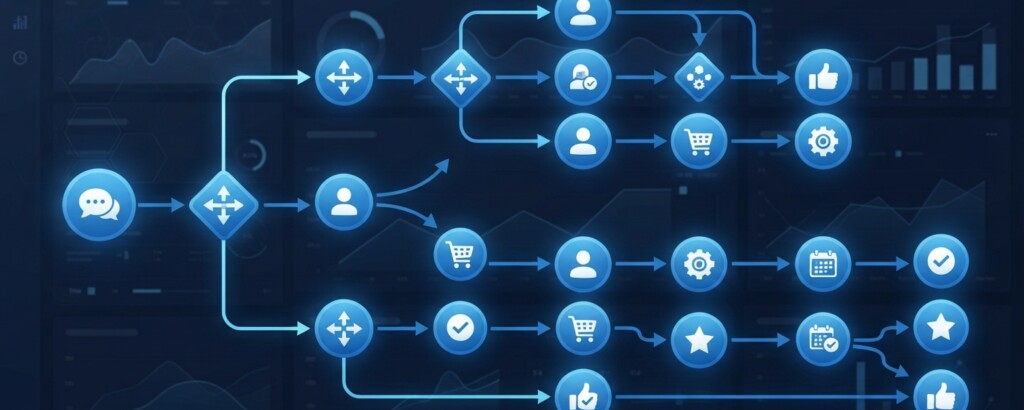
The biggest mistake teams make is opening a chatbot builder tool before they have mapped the conversation on paper. A chatbot flow is essentially a decision tree: each visitor response leads to a different next step. Skipping the planning stage leads to bots that ask irrelevant questions, dead-end conversations, or loops that frustrate visitors.
Start by defining the goal of the bot on each specific page. A bot on your pricing page should behave differently than one on a blog post. The pricing page visitor is further along and can handle more direct qualifying questions. The blog reader needs a softer introduction, maybe just an offer to answer questions about the article topic.
- Define the single primary goal for the bot on each page type — demo booking, pricing inquiry, resource download, or support deflection.
- Write out the opening message exactly as it will appear, keeping it short and specific to what the visitor is doing on that page.
- Draft two or three branching paths based on likely visitor responses, such as ‘just browsing,’ ‘ready to buy,’ or ‘comparing options.’
- Identify the two or three qualifying questions that matter most for your business, such as company size, budget range, or timeline.
- Decide the handoff point — when the bot stops asking questions and either books a meeting, sends a resource, or transfers to a human agent.
- Test the flow by role-playing as a skeptical visitor and noting where you would get annoyed or confused.
Mapping this out before touching software saves enormous rework later. Most chatbot platforms make it easy to build branching logic, but they cannot tell you whether the branches make sense for your buyer. That judgment has to come from you.
Designing Questions That Qualify Without Feeling Like an Interrogation
Qualification is where most chatbot flows fall apart. Bots either ask too little, generating low quality leads that waste sales time, or ask too much too fast, causing visitors to abandon the chat. The fix is sequencing: ask easy, low commitment questions first, then earn the right to ask more sensitive ones.
A useful framework borrowed from sales qualification is BANT, which stands for Budget, Authority, Need, and Timeline. You do not need to ask about all four in a chatbot, and you should never ask about budget as the first question. Instead, lead with need, since understanding what problem the visitor is trying to solve feels natural and helpful. Follow with timeline, since that is a relatively comfortable question for most people to answer. Save budget and authority — whether they are the decision maker — for later in the conversation, once the visitor has invested time and feels some momentum.
| Question Type | Example Phrasing | When to Ask |
|---|---|---|
| Need | What are you hoping to solve with a tool like this? | First question, right after greeting |
| Role or use case | Are you exploring this for yourself or your whole team? | Second question, builds context |
| Timeline | Are you looking to get started this month or just researching? | Third question, filters urgency |
| Budget or scale | Roughly how many people would be using this? | Fourth question, softer than asking dollar amount directly |
| Contact handoff | Want me to set up a quick call with someone on our team? | Final question, only after value is established |
Notice that none of these questions ask for an email address first. Visitors give contact information far more willingly after a short, useful exchange than when it is the opening demand. Reserve the email or phone number request for the handoff step, once the bot has demonstrated it understands the visitor’s situation and is offering something specific in return, like a tailored resource or a scheduled call.
Avoid asking more than four or five questions before offering value or a next step. Chatbot conversations that feel like a long form with extra steps still get abandoned — the medium changes but visitor patience does not increase.
Handling the Handoff: Routing Leads to the Right Next Step
A chatbot that qualifies leads but has nowhere good to send them is only half built. The handoff logic — what happens after qualification — is where lead generation actually turns into revenue. There are generally three handoff paths, and your flow should route visitors to the correct one based on their answers.
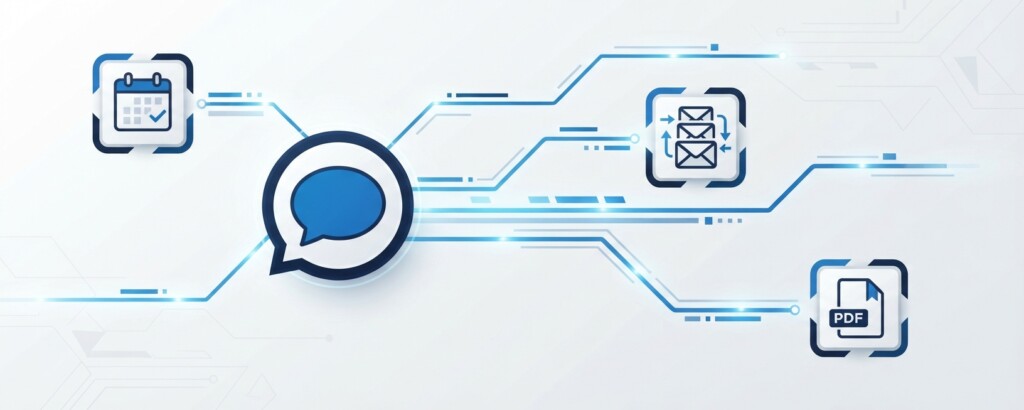
The first path is direct booking, used for visitors who show strong buying signals, such as a near-term timeline and clear authority to decide. These visitors should go straight to a calendar link for a sales call, with no additional friction. The second path is nurture, for visitors who are interested but not ready, such as someone researching for a decision six months out. These visitors should receive a relevant resource, like a guide or case study, and get added to an email sequence rather than pushed toward a sales call they are not ready for. The third path is self-serve, for visitors who are simply looking for information, such as pricing details or product specifications, and just need the bot to answer directly or link to a resource page.
Misrouting is a common and costly error. Sending every chatbot conversation to a sales rep, regardless of fit, burns trust with your sales team and makes them less likely to follow up on chatbot leads at all. Equally, failing to route genuinely hot leads to a live person fast enough means you lose deals to competitors who respond quicker.
Real-World Example: A SaaS Company’s Chatbot Flow
Consider a mid-sized project management software company that added a chatbot to its pricing page. The original flow asked for name, email, and company size immediately, mimicking the standard contact form. Conversion to booked demos was under three percent of chatbot engagements, barely better than the form it replaced.
The redesigned flow opened with a question about what the visitor was trying to manage — projects, clients, or internal operations — which let the bot tailor its next response with a relevant example. It then asked about team size, framed as context rather than qualification, since the visitor had already received a helpful answer and felt less guarded. Only after two genuinely useful exchanges did the bot offer a demo booking link for visitors with larger teams and near-term timelines, while smaller teams and distant timelines were offered a self-serve trial signup instead. Demo bookings from chatbot conversations rose to roughly eleven percent of engagements within two months, and sales reported the leads arriving were noticeably more prepared for the call because the bot had already surfaced their primary use case.
The lesson from this example is not that one specific script works universally. It is that sequencing value before asking for commitment, and routing based on actual signals rather than treating every visitor identically, produced the improvement. Your own numbers will differ, but the underlying structure transfers across industries.
Key Takeaways
- Map the conversation flow on paper before building in any chatbot platform, with a clear goal for each page the bot appears on.
- Sequence questions from easy and need-focused to more sensitive, saving budget and contact details for after value has been demonstrated.
- Keep qualifying question counts to four or five maximum before offering a next step or resource.
- Build three distinct handoff paths — direct booking, nurture, and self-serve — and route leads based on their actual answers, not uniformly.
- Review chatbot transcripts regularly to spot where visitors drop off or give confusing answers, and refine the flow accordingly.
AI chatbots for lead generation succeed or fail based on the conversation design behind them, not the sophistication of the underlying technology. A simple, well-sequenced flow that asks good questions and routes leads correctly will consistently outperform a technically advanced bot built without a clear plan for qualification and handoff. Treat the chatbot as a scripted conversation with branching logic, test it the way you would test a sales call script, and revisit it as you learn what your visitors actually respond to.
Want to build a lead generation system that actually converts?
Explore more practical guides on marketing automation, lead scoring, and conversion strategy to keep sharpening your approach.