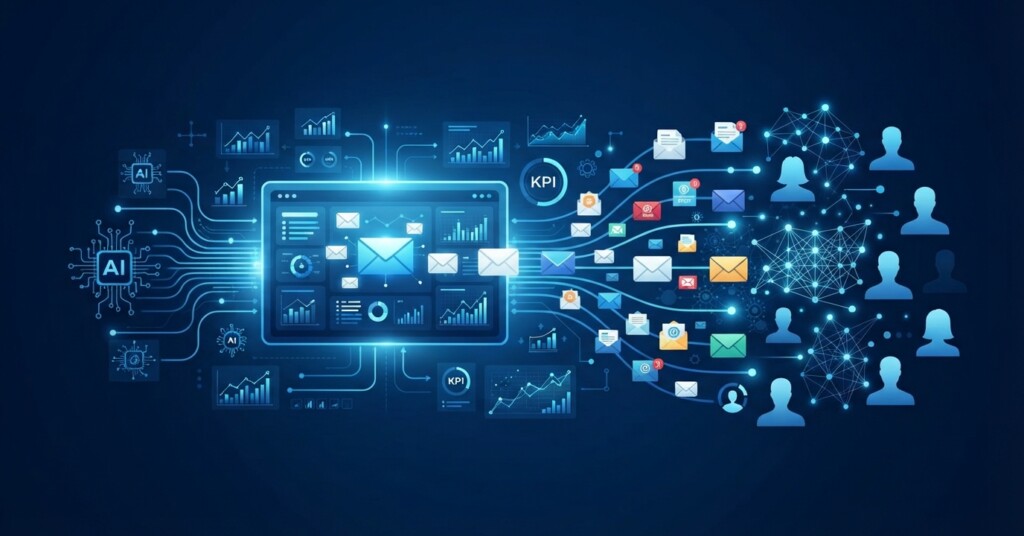
Email marketing has always promised a simple deal: send relevant messages, get better results. The problem is that ‘relevant’ used to mean segmenting your list into three or four buckets and hoping for the best. AI-powered email personalization changes that math entirely. Instead of guessing which segment a subscriber belongs to, machine learning models analyze individual behavior and predict what each person actually wants, right down to subject lines, send times, and product recommendations. This article walks through how AI-powered email personalization works, what it can realistically do for your campaigns, and how to start implementing it without a data science degree.
Why Traditional Segmentation Falls Short
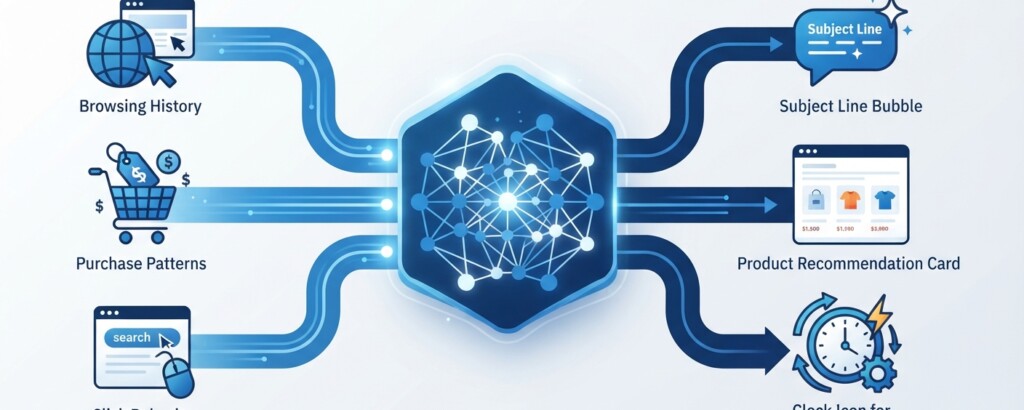
Most marketers learn segmentation early: split your list by demographics, purchase history, or engagement level, then send tailored campaigns to each group. This works, but it has a ceiling. A segment of ‘customers who bought in the last 90 days’ might include someone who buys weekly and someone who bought once on a whim. Treating them the same way wastes the opportunity that personalization was supposed to capture. Machine learning addresses this by treating each subscriber as a unique data point rather than a member of a static group. It looks at dozens or hundreds of behavioral signals — click patterns, browsing history, time-of-day activity, past purchase cadence, even the types of subject lines someone tends to open — and builds a dynamic profile that updates continuously. The result is personalization at the individual level, not the segment level.
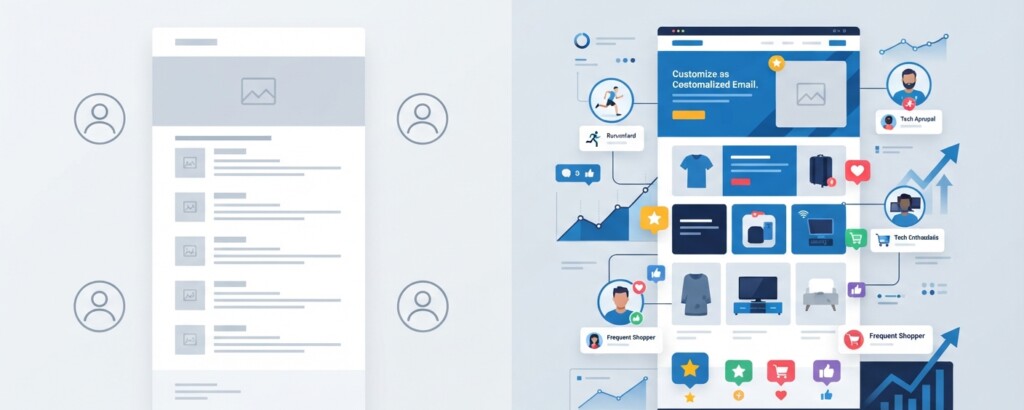
Think of traditional segmentation as sorting mail into labeled bins, while AI personalization is more like having a smart assistant who knows each recipient’s preferences and adjusts the letter before it’s even printed.
How Machine Learning Actually Personalizes Email
There are three core jobs machine learning handles in email personalization: predicting content relevance, predicting timing, and predicting channel or frequency preferences. Understanding each one helps you choose the right tools and set realistic expectations. Content prediction models analyze what a subscriber has engaged with before and recommend similar or complementary content. An e-commerce brand might use this to swap in different product images for different subscribers within the same campaign send — one person sees running shoes, another sees hiking boots, based purely on browsing history. This is sometimes called dynamic content or 1:1 personalization. Send-time optimization models learn when each subscriber is most likely to open and engage with an email. Instead of blasting your whole list at 9 a.m., the system staggers delivery so each person receives the email during their personal ‘engagement window.’ Some platforms report open rate improvements of 10–20% from this change alone, simply because the email lands when someone is actually checking their inbox. Frequency and channel models predict how much contact a subscriber can tolerate before they disengage or unsubscribe. This is especially useful for brands running frequent promotional campaigns, since it helps avoid fatigue-driven unsubscribes by automatically throttling send frequency for subscribers showing early warning signs of disengagement.
Building Your AI Email Personalization Strategy Step by Step
You don’t need to build models from scratch. Most email service providers (ESPs) like Klaviyo, HubSpot, and Salesforce Marketing Cloud now offer built-in AI features. The real work is in setting up your data and strategy correctly so those features perform well.
- Audit your data quality first. Machine learning models are only as good as the data feeding them. Make sure your email platform is capturing purchase history, website behavior, and engagement metrics consistently, not just open and click data.
- Start with one use case. Don’t try to personalize everything at once. Pick send-time optimization or product recommendations as your first project, measure results, then expand.
- Connect your CRM and email platform. Siloed data is the biggest reason AI personalization underperforms. The model needs a full view of each subscriber, not just email engagement history.
- Set a baseline before launch. Record your current open rates, click rates, and conversion rates so you can measure the actual lift once personalization is live.
- Test against a control group. Hold back a small percentage of your list from AI-driven sends so you can compare performance and confirm the model is actually improving results.
- Review and retrain regularly. Subscriber behavior changes over time, and models need fresh data to stay accurate. Most platforms retrain automatically, but it’s worth checking the cadence.
A mid-sized online retailer following this exact process typically sees measurable gains within 60–90 days: modest lifts at first from send-time optimization, followed by larger improvements once product recommendation models have enough purchase data to work with.
Real-World Example: Personalization in Action
Consider a subscription meal-kit company with 200,000 email subscribers. Before implementing AI personalization, they sent the same weekly newsletter to everyone at 10 a.m. on Tuesdays, featuring that week’s new recipes. Open rates hovered around 18%, and click-through rates sat near 2%. After integrating an AI-driven personalization layer, three things changed. First, send times were staggered per subscriber based on historical engagement behavior. Second, the recipe content block became dynamic, showing vegetarian options to subscribers who had skipped meat-based meals in the past three months, and showing quick-prep recipes to subscribers who tended to open emails on weekday evenings (a signal of time-constrained households). Third, a churn-risk model flagged subscribers showing declining engagement and automatically routed them into a re-engagement sequence with a discount offer instead of the standard newsletter. Within four months, open rates rose to 27% and click-through rates nearly doubled to 3.8%. More importantly, the churn-risk segment saw a 15% reduction in unsubscribe rate compared to the previous quarter, because at-risk subscribers were getting a different message entirely rather than more of the same content that was already failing to engage them.
| Metric | Before AI Personalization | After AI Personalization |
|---|---|---|
| Average Open Rate | 18% | 27% |
| Click-Through Rate | 2.0% | 3.8% |
| Unsubscribe Rate (at-risk segment) | Baseline | -15% |
| Revenue per Email Sent | $0.08 | $0.14 |
AI personalization can backfire if it feels invasive. If subscribers notice content that seems to reveal too much about their browsing or purchase behavior, it can feel like surveillance rather than service. Keep personalization focused on genuine usefulness — relevant products, helpful timing — and avoid referencing specific behaviors in ways that feel creepy, like naming exact pages someone visited.
Common Mistakes to Avoid
The biggest mistake marketers make with AI email personalization is treating it as a plug-and-play feature rather than an ongoing practice. Turning on a ‘smart send time’ toggle without checking results for months isn’t strategy, it’s guesswork with extra steps. Review your model’s performance the same way you’d review any campaign: regularly and critically. Another common issue is over-personalizing too quickly. Jumping straight into fully dynamic, 1:1 content across every email can overwhelm your team’s ability to QA campaigns and can introduce errors that are hard to catch at scale, like a recommendation engine suggesting a product that’s out of stock. Start narrow, confirm accuracy, then expand scope. Finally, don’t ignore the subscribers your model struggles to read. New subscribers with little behavioral history, sometimes called the ‘cold start’ problem, won’t get much benefit from personalization until the system has enough data. For these subscribers, a solid welcome series based on stated preferences (collected at signup) works better than waiting for the algorithm to catch up.
A simple fix for the cold-start problem: ask new subscribers one or two preference questions during signup, such as product category interest or preferred content type. This gives your model a head start before behavioral data accumulates.
Key Takeaways
AI-powered email personalization moves beyond static segments to treat each subscriber as an individual, using machine learning to predict the right content, timing, and frequency for them specifically. The technology is accessible through most modern email platforms, so the real competitive advantage comes from clean data, a focused rollout strategy, and consistent measurement. Start with one use case such as send-time optimization or product recommendations, test against a control group, and expand once you’ve confirmed real performance gains. Done well, AI-powered email personalization doesn’t just improve open and click rates — it builds a sending practice that respects subscriber attention instead of spamming everyone with the same message at the same time.
Ready to Put AI Personalization to Work in Your Email Program?
Explore more practical guides on marketing automation, segmentation strategy, and AI tools built for marketers who want results without the guesswork.