
Scroll through any marketing meeting and you will hear a mix of acronyms and platform-speak that can make even experienced marketers feel lost. Social media marketing terminology changes fast, and every platform seems to invent its own vocabulary for the same basic ideas. This glossary breaks down the terms you actually need to know — organized by category — so you can walk into your next strategy session speaking the same language as your team, your clients, and the platforms themselves.
By the end of this article, you will understand the core vocabulary behind platform mechanics, algorithm behavior, and performance metrics. You will also see how these terms connect to real decisions you make when planning content, running ads, or reporting results.
Platform Jargon: The Words Every Channel Uses Differently
Each social platform has its own dialect. A ‘post’ on Facebook is not quite the same thing as a ‘post’ on LinkedIn, and a ‘Story’ behaves differently depending on whether you are on Instagram, Facebook, or Snapchat. Understanding these distinctions matters because the same piece of content can perform completely differently depending on the format you choose.
- Handle: Your unique username on a platform (for example, @dmbrief). Used for mentions and searchability.
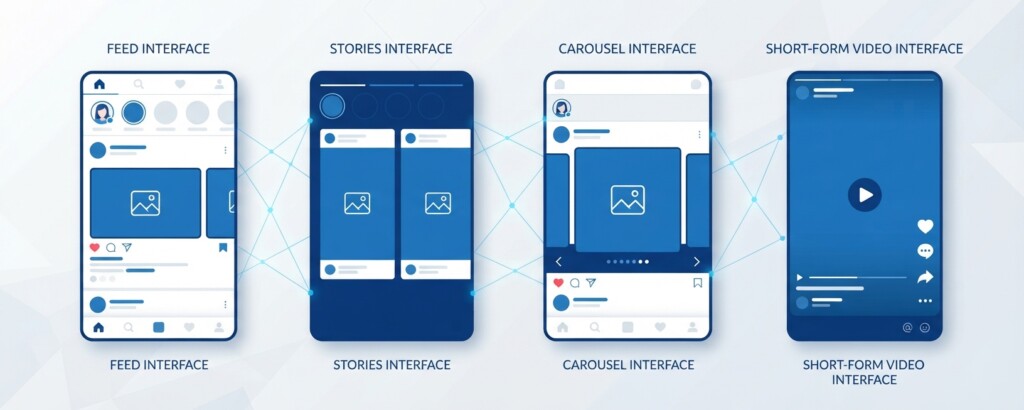
- Feed: The scrolling stream of content a user sees when they open the app, typically ranked by algorithm rather than strict chronological order.
- Stories: Short-lived, vertical content that disappears after 24 hours — common on Instagram, Facebook, and Snapchat.
- Reels: Meta’s short-form vertical video format, originally launched on Instagram and later expanded to Facebook, developed alongside competitors like TikTok and YouTube Shorts.
- Carousel: A single post containing multiple swipeable images or cards, often used to tell a longer story or walk through a process.
- Hashtag: A searchable keyword tag (#digitalmarketing) that groups content around a topic or trend.
- UGC (User-Generated Content): Content created by customers or fans rather than the brand itself, often used in ads for authenticity.
- Influencer tiers: Nano (1K–10K followers), micro (10K–100K), macro (100K–1M), and mega (1M+) — each tier offers different trade-offs between reach and engagement.
Quick tip: When briefing a content creator or agency, always specify the platform and format together — for example, ‘Instagram Reel’ or ‘LinkedIn carousel.’ The same message often needs a different structure depending on where it lives.
Algorithm Terms: How Platforms Decide What Gets Seen
Algorithms determine whose content shows up in a feed and in what order. While each platform keeps its exact ranking formula private, they all rely on similar signals. Understanding these terms helps you make smarter decisions about content timing, format, and engagement strategy.
- Engagement rate: The ratio of interactions (likes, comments, shares, saves) to total followers or impressions. A core signal most algorithms use to judge content quality.
- Dwell time: How long a user lingers on a piece of content before scrolling away. Longer dwell time often signals relevance to the algorithm.
- Reach vs. impressions: Reach is the number of unique people who saw your content; impressions count every time it was displayed, including repeat views by the same person.
- Organic reach: The number of people who see your content without paid promotion — this has declined significantly across most platforms over the past decade.
- Shadowban: An unofficial term for when a platform quietly reduces a post’s or account’s visibility, often due to policy violations or spammy behavior, without notifying the user.
- Algorithm update: A change to the ranking system that can shift what content gets prioritized — these updates can noticeably affect reach overnight.
- EdgeRank (legacy term): An older Facebook concept describing how affinity, weight, and time decay (recency) combine to influence feed placement. Still a useful mental model even though the formula has evolved.
Do not chase algorithm rumors. Platforms rarely confirm exact ranking factors, and strategies built around guesswork (like posting at a supposedly ‘magic’ time) often waste effort. Focus on consistent engagement quality instead of trying to reverse-engineer a black box.
Metrics That Actually Matter for Reporting
Vanity metrics like follower count feel good to report, but they rarely tell you whether social media is driving business results. Below is a breakdown of the metrics marketers should track, grouped by what question each one answers.
| Metric | What It Measures | Why It Matters |
|---|---|---|
| Impressions | Total number of times content was displayed | Shows overall visibility, but can be inflated by repeat views |
| Reach | Unique users who saw the content | Better indicator of true audience size than impressions |
| Engagement Rate | Interactions divided by reach or followers | Signals whether content resonates, not just whether it was seen |
| Click-Through Rate (CTR) | Clicks divided by impressions | Measures how compelling your call-to-action or caption is |
| Conversion Rate | Percentage of clicks that complete a desired action | Connects social activity to actual business outcomes |
| Cost Per Click (CPC) | Ad spend divided by number of clicks | Key efficiency metric for paid social campaigns |
| Share of Voice | Your brand’s mentions compared to competitors | Useful for benchmarking brand visibility over time |
When building a report, resist the urge to include every available metric. Choose two or three that map directly to the goal of the campaign — awareness, consideration, or conversion — and present those clearly instead of overwhelming stakeholders with a dashboard full of numbers.

Putting the Vocabulary to Work: A Practical Example
Imagine a small business launching a new product line. The marketing manager plans a campaign using a mix of Reels for awareness, carousel posts for education, and a UGC-driven ad set for conversion. She sets goals using reach for the awareness phase, engagement rate for the consideration phase, and conversion rate for the final push.
Midway through the campaign, she notices a sudden drop in organic reach on one post. Rather than assuming a shadowban, she checks whether the content violated any community guidelines and reviews recent algorithm update news from the platform’s official blog. She finds nothing unusual and concludes it was simply normal fluctuation — a reminder that not every dip has a dramatic explanation.
When terminology gets confusing across a team, create a shared one-page glossary (like this one) and pin it in your project management tool. It saves time in every future meeting and keeps new hires or interns from feeling lost.
Key Takeaways
- Platform jargon varies by channel — know the difference between formats like Stories, Reels, and carousels before planning content.
- Algorithm terms like dwell time and engagement rate explain why some posts get seen more than others, but avoid chasing unverified ranking ‘hacks.’
- Reach and impressions are not the same thing; choose metrics based on the specific goal of each campaign stage.
- A shared glossary across your team reduces miscommunication and speeds up planning and reporting.
- Focus on a small set of meaningful metrics rather than reporting everything the platform makes available.
Mastering social media marketing terminology is not about memorizing buzzwords — it is about understanding the mechanics behind what you see in your dashboard every day. Once you know the difference between reach and impressions, or why dwell time matters to an algorithm, you can make sharper decisions about content, timing, and budget allocation across every platform you manage.
Want to keep building your digital marketing vocabulary?
Explore more practical guides on SEO, paid advertising, and analytics to round out your skill set as a confident, well-rounded marketer.