Meta Ads audience targeting is the difference between campaigns that burn through budget and campaigns that consistently deliver leads and sales. Whether you are running ads on Facebook, Instagram, or across Meta’s network, the platform’s real power lies in two audience types: Custom Audiences (built from data you already have) and Lookalike Audiences (new prospects who resemble your best customers). This guide walks through exactly how to build both, when to use them, and how to avoid the common mistakes that waste ad spend.
Why Meta Ads Audience Targeting Matters Alongside Your Creative
While modern Meta ad delivery increasingly treats creative as a primary targeting mechanism, even the best creative struggles if it lacks strong audience signals. Meta’s machine learning algorithm is exceptionally good at finding conversions, but providing high-quality first-party data and strategic audience definitions gives the system the starting signals it needs to optimize quickly.
Think of it this way: broad, unguided targeting requires the algorithm to find qualified buyers from scratch. Custom and Lookalike Audiences are like handing a note directly to people who already know your brand or who share verified traits with your best customers. Strategic audience architecture works hand in hand with ad creative to maximize campaign performance and lower acquisition costs.
Rule of thumb: treat audience architecture and creative design as complementary pillars. While compelling creative engages and qualifies prospects in modern Meta ad delivery, pairing it with high-quality Custom and Lookalike audiences ensures your ads convert at maximum efficiency.
Building Custom Audiences That Actually Convert
A Custom Audience is a group of people you target based on information you already have—website visitors, customer lists, app users, or people who engaged with your content on Facebook or Instagram. These audiences convert better than cold targeting because you are re-engaging people who already have some familiarity with your brand.
- Website Custom Audiences: Built from the Meta Pixel or Conversions API, tracking visitors to specific pages (like a pricing page or cart page).
- Customer List Audiences: Uploaded directly from your CRM or email platform—these are your highest-intent audiences.
- Engagement Audiences: People who liked, commented, watched a video, or interacted with your Instagram or Facebook profile.
- App Activity Audiences: Users who took specific in-app actions, useful for mobile app marketers.
- Offline Activity Audiences: Data from in-store purchases or call center interactions, matched back to Meta profiles.
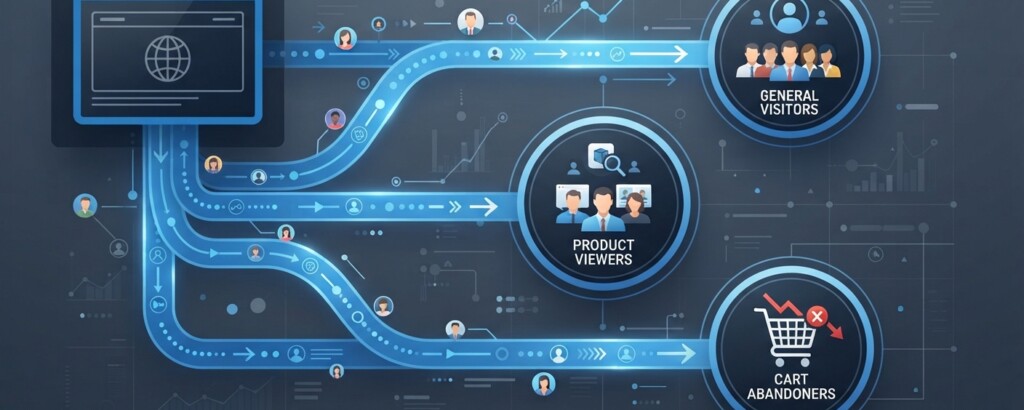
The mistake most beginners make is building one giant Custom Audience of all website visitors and calling it done. That is a good starting point, but the real value comes from segmentation. A visitor who spent thirty seconds on your homepage has a very different intent level than one who added a product to cart and abandoned it.
For example, an online furniture retailer might build three separate website Custom Audiences: all visitors (last 30 days), product page viewers (last 14 days), and cart abandoners (last 7 days). Each group gets a different message. Cart abandoners see a direct offer with urgency. Product viewers see social proof and reviews. General visitors see brand-building content that reinforces why the store is worth trusting.
| Audience Type | Data Source | Typical Use Case | Recency Window |
|---|---|---|---|
| Website Visitors | Meta Pixel / Conversions API | Retargeting general traffic | 30–90 days |
| Cart Abandoners | Pixel event: AddToCart | Recovery offers, urgency messaging | 3–7 days |
| Customer List | CRM / email export | Upsell, cross-sell, win-back campaigns | No expiration until refreshed |
| Video Viewers (75%+) | Facebook/Instagram engagement | Warm retargeting for high-intent viewers | 14–30 days |
| Instagram Engagers | Profile interactions | Top-of-funnel nurture | 30–60 days |
Custom Audiences built from customer lists require the data to be properly hashed and uploaded in a Meta-compliant format. Uploading raw personal data incorrectly, or using data without proper consent, can violate Meta’s policies and data protection laws like GDPR. Always confirm you have the legal right to use the data for advertising purposes before uploading.
Creating Lookalike Audiences That Find New High-Value Customers
Once you have a solid Custom Audience, you can create a Lookalike Audience—a new group of people Meta identifies as sharing similar characteristics, behaviors, and demographics with your source audience. This is how you scale beyond people who already know you and reach cold prospects who are statistically likely to convert.
The quality of a Lookalike Audience depends almost entirely on the quality of the source audience you feed it. A Lookalike built from a list of 500 email subscribers who never purchased will perform very differently from one built off 500 customers who each spent over $200. Meta’s system matches on quality signals, so seed audiences that represent your best customers—not just anyone who filled out a form—produce far stronger results.
- Choose a seed audience with at least 100 people from a single country, though 1,000+ produces stronger, more stable matches.
- Use high-intent seed data—actual purchasers or high-value leads—rather than broad email lists.
- Select an audience size percentage between 1% and 3% of the target country’s population for tighter similarity; larger percentages trade precision for reach.
- Create separate Lookalikes for different customer tiers, such as one-time buyers versus repeat buyers.
- Update static customer list seeds every 60–90 days so Meta’s automated 3-to-7-day Lookalike refresh incorporates your latest customer behavior.
A useful real-world example: a subscription skincare brand built a Lookalike Audience from customers who had renewed their subscription at least twice—not from all customers. That single change in seed audience quality lowered their cost per acquisition by nearly 30% because the Lookalike model matched on retention behavior, not just first-time purchase behavior.
If you are just starting out and do not yet have enough purchase data, use a Lookalike based on your highest-engagement website visitors or email subscribers as a bridge audience until you accumulate enough conversion data to build purchase-based Lookalikes.
Structuring Campaigns Around Audience Layers
Custom and Lookalike Audiences work best when arranged in a deliberate structure rather than thrown together in one ad set. A simple, effective framework follows the classic marketing funnel: cold, warm, and hot.
Cold audiences are Lookalikes or broad interest targeting introducing your brand for the first time. Warm audiences are engagement-based Custom Audiences—people who watched a video or visited your site but have not purchased. Hot audiences are your highest-intent Custom Audiences, like cart abandoners or past purchasers eligible for a repeat offer.
This layered approach also solves a common budget problem: spending too much on cold traffic without ever following up. Many small businesses run a single awareness campaign and expect people to convert on the first exposure. Retargeting through Custom Audiences typically produces conversion rates several times higher than cold Lookalike traffic because you are meeting people at a later, more decided stage of their buying journey.
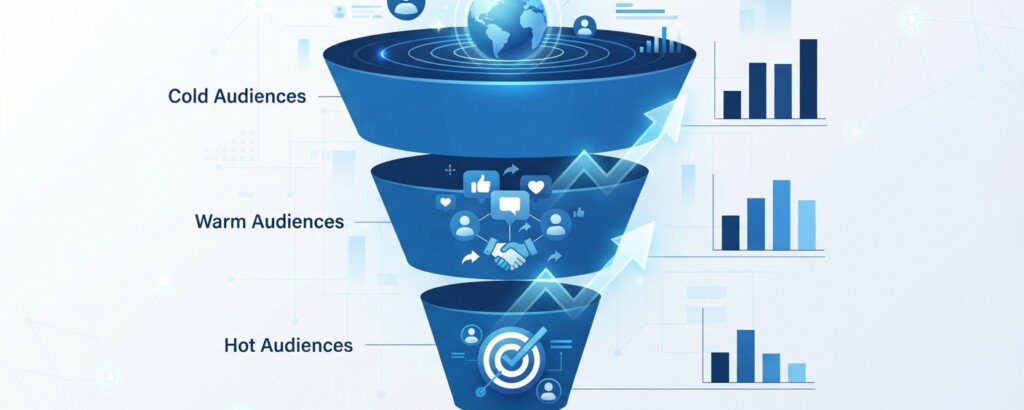
A practical budget split many advertisers use as a starting point: 50–60% toward cold Lookalike audiences to fuel new customer growth, 25–30% toward warm retargeting to move engaged prospects toward conversion, and 15–20% toward hot audiences like cart abandoners and past customers, where return on ad spend is typically highest.
Avoid heavy audience overlap between ad sets targeting the same funnel stage. While Meta’s auction deduplication automatically suppresses competing ad sets from entering the same auction to stop you from bidding against yourself, severe overlap causes underdelivery and auction throttling. Use Meta’s Audience Overlap tool periodically to check for this.
Common Mistakes That Undermine Audience Targeting
Even experienced marketers fall into predictable traps with Custom and Lookalike Audiences. Recognizing these early saves significant budget.
- Using audiences that are too small: Custom Audiences under 1,000 people often struggle to deliver consistent results and can suffer from delivery restrictions.
- Never excluding converted customers: Failing to exclude existing customers from cold campaigns wastes budget showing acquisition ads to people who already bought.
- Letting seed lists go stale: A static customer list that is never refreshed prevents your Lookalike models from learning from your latest buyers.
- Ignoring frequency: Showing the same retargeting ad to a warm audience too many times leads to ad fatigue and rising costs.
- Building Lookalikes from low-quality seed data: Using all leads instead of qualified leads dilutes the model’s accuracy.
A mid-sized B2B software company learned this the hard way when they discovered nearly 20% of their cold campaign budget was being shown to existing customers because they had never set up an exclusion audience. Adding a simple customer-list exclusion immediately improved their cost per lead by redirecting that wasted spend toward genuinely new prospects.
Key Takeaways for Meta Ads Audience Targeting
- Custom Audiences work best when segmented by intent level—website visitors, product viewers, and cart abandoners should each receive different messaging.
- Lookalike Audiences are only as strong as the seed data behind them; use high-value customer data, not generic lead lists.
- Structure campaigns in cold, warm, and hot layers so budget flows toward the highest-converting audiences over time.
- Regularly update static seed lists and check for overlap between ad sets to avoid delivery suppression and wasted spend.
- Always exclude existing customers from acquisition campaigns unless you are specifically running a win-back or upsell offer.
Getting Meta Ads audience targeting right is less about finding a secret setting and more about building a disciplined system: clean data feeding accurate Custom Audiences, high-quality seeds producing strong Lookalikes, and a funnel structure that matches messaging to intent. Get these fundamentals right, and your ad creative finally gets the chance to perform the way it is supposed to.
Want to go deeper on Meta Ads strategy?
Explore more practical guides on paid advertising, analytics, and campaign structure to keep sharpening your digital marketing skills.