
Roughly 96 to 98 percent of people who visit a website leave without converting. They add a product to their cart and abandon it, they read a blog post and never return, or they browse pricing pages and vanish. Retargeting campaigns exist to solve exactly this problem — they let you follow up with those visitors across the web and pull them back toward a purchase, sign-up, or inquiry. This article walks through how retargeting works, the main types of campaigns you can run, how to set one up correctly, and the mistakes that quietly waste ad budget.
What Retargeting Actually Is (and Why It Works)
Retargeting, sometimes called remarketing, is a form of paid advertising that shows ads specifically to people who already interacted with your business — usually by visiting your website, using your app, or appearing on a list you uploaded, like an email database. Instead of trying to reach cold strangers, you are re-approaching warm leads who already showed some level of interest.
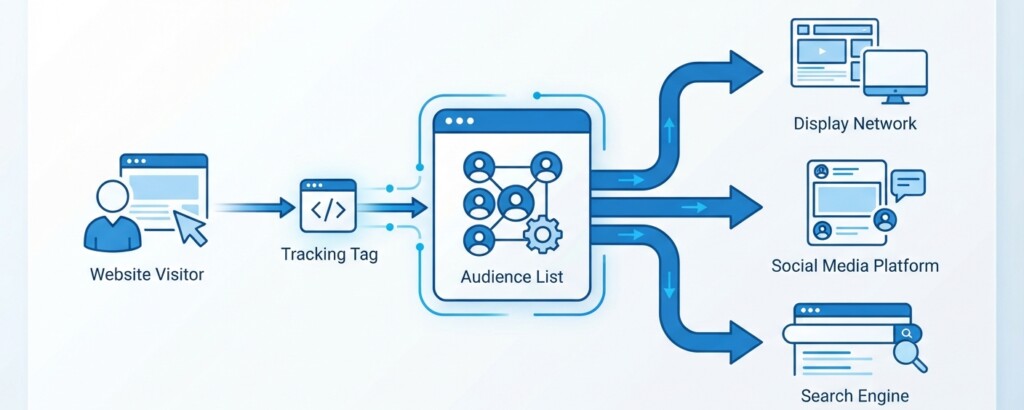
Here is the mechanism in plain terms: when someone visits your site, tracking code (such as a tag or pixel) sets a first-party cookie or transmits event data through a server-side API, recording identifiers that match to user profiles on platforms like Google Ads or Meta Ads Manager. That identifier gets added to an audience list. From that point forward, the platform can show that visitor ads as they browse other websites, scroll social feeds, or watch YouTube videos — even though they left your site without completing an action.
The reason retargeting outperforms cold prospecting on almost every metric is simple: familiarity reduces friction. A person who already knows your brand needs less convincing than someone seeing your name for the first time. That is why retargeting campaigns typically show higher click-through rates, higher conversion rates, and lower cost per acquisition than campaigns aimed at brand-new audiences.
Retargeting works best as a complement to your other marketing, not a replacement for it. You still need traffic coming in through SEO, content, and top-of-funnel ads. Retargeting simply makes sure that traffic is not wasted.
The Main Types of Retargeting Campaigns
Not all retargeting is the same. Different platforms and strategies suit different goals, budgets, and business types. Understanding the main categories helps you choose the right mix instead of running one generic campaign and hoping for the best.
- Site retargeting: The most common type. You target anyone who visited specific pages on your website, such as a product page, a pricing page, or a blog post, with ads reminding them to come back.
- Dynamic product retargeting: Used heavily by ecommerce businesses. Instead of a generic ad, the visitor sees ads featuring the exact products they viewed or added to their cart, often pulled automatically from your product catalog.
- Email list retargeting: You upload a list of email addresses (from newsletter subscribers or past customers) and the platform matches them to user profiles, letting you advertise to people even if they have not visited your site recently.
- Search retargeting: Targets people based on search terms they used elsewhere, showing your ads to people who searched for related keywords even if they never visited your site.
- Social media retargeting: Ads shown specifically to people who engaged with your Instagram, Facebook, TikTok, or LinkedIn content, such as watching a video or visiting your profile.
- Sequential retargeting: A series of ads shown in a planned order over time, gradually shifting the message from a soft reminder to a stronger offer or discount.
A small business selling handmade furniture, for example, might combine dynamic product retargeting for cart abandoners with a sequential campaign for blog readers — first reminding them of the brand, then showcasing a bestseller, then offering a limited-time discount if they still have not purchased.
Setting Up a Retargeting Campaign Step by Step
The technical setup is more approachable than it sounds. Most platforms guide you through the process, but understanding the logic behind each step helps you make smarter decisions rather than just clicking through defaults.
- Install tracking tags and APIs. Add the Meta Pixel (ideally paired with the Conversions API), the Google tag, or the LinkedIn Insight Tag to your site, commonly managed through Google Tag Manager so you can oversee tracking in one place.
- Define your audience segments. Do not lump every visitor into one bucket. Separate people who viewed a product from people who started checkout, and separate blog readers from people who visited your contact page.
- Set audience duration. Decide how long someone stays on your retargeting list after visiting — commonly between 7 and 30 days, though high-consideration purchases like software or real estate may warrant 60 to 90 days.
- Exclude converters. Set up exclusion rules so people who already purchased or signed up stop seeing the same ad. Nothing wastes budget faster than advertising a product to someone who already bought it.
- Craft the message per segment. Cart abandoners need a direct nudge, sometimes with a discount. Blog readers need a softer, educational follow-up that builds trust before asking for a sale.
- Set frequency caps. Limit how many times the same person sees your ad per day or week to avoid ad fatigue and brand annoyance.
- Launch, monitor, and adjust. Check performance after the first week and refine targeting, creative, or budget based on what the data shows.
| Segment | Typical Trigger | Best Ad Approach | Suggested Window |
|---|---|---|---|
| Cart abandoners | Added product, did not purchase | Direct reminder, possibly a discount or free shipping offer | 3–7 days |
| Product page viewers | Viewed but did not add to cart | Highlight benefits, reviews, or social proof | 7–14 days |
| Blog or content readers | Read an article, no product interaction | Educational follow-up, lead magnet, or newsletter signup | 14–30 days |
| Past purchasers | Completed a purchase | Cross-sell or upsell related products | 30–90 days |
| Form abandoners | Started but did not submit a form | Address objections, offer help or a simpler next step | 7–14 days |
Avoid retargeting people immediately after they complete a purchase or sign-up with an ad promoting the exact same product. It looks careless, wastes spend, and can frustrate customers who feel like you are not paying attention to their actions.
Writing Retargeting Ads That Actually Convert
Retargeting gives you an advantage most cold ads do not have: context. You know what the person looked at, so your messaging can speak directly to that instead of using generic brand messaging. This is where retargeting campaigns often fail — marketers reuse the same top-of-funnel ad instead of tailoring the message to someone who is already halfway through the decision process.
A few principles consistently improve performance. First, acknowledge the visit indirectly rather than sounding robotic — phrases like ‘still thinking it over?’ or ‘your cart is waiting’ work because they mirror the actual behavior. Second, use urgency sparingly and honestly; a real limited-time discount works, but fake countdown timers erode trust once customers notice the deadline resets. Third, vary the creative across the campaign duration so the same visitor is not shown an identical static image ten times in a row — this is one of the fastest ways to trigger banner blindness.
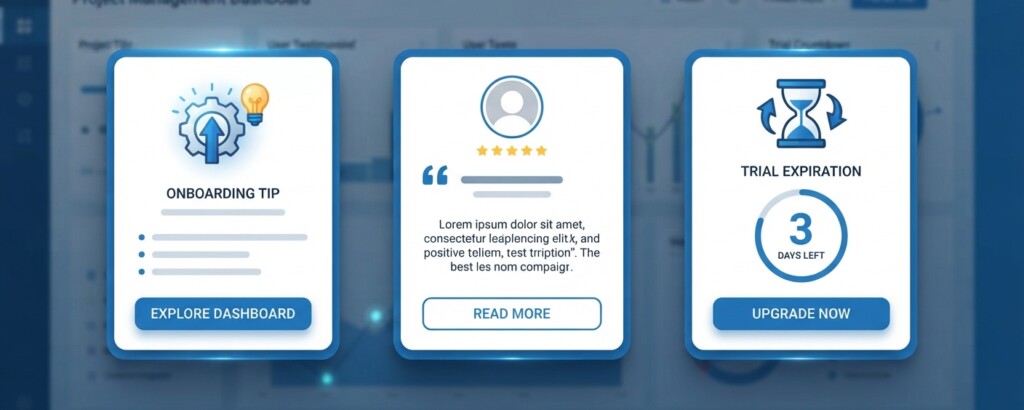
Consider a software company offering a free trial. Someone signs up but never logs in after day one. A single generic ad saying ‘check out our software’ will likely be ignored. A better sequence might start with a helpful tip about a feature they have not tried, followed a few days later by a customer success story, and finally a message noting their trial is ending with a simple button to upgrade. Each ad answers a different objection instead of repeating the same pitch.
Rotate at least three ad variations per audience segment and refresh creative every two to three weeks. Even strong ads lose effectiveness once an audience has seen them repeatedly.
Measuring Retargeting Success
Retargeting should be judged on different benchmarks than cold prospecting campaigns because the audience starts warmer. Click-through rate, cost per acquisition, and return on ad spend are the core metrics, but view-through conversions matter too — these count purchases made by someone who saw your ad but did not click it, then converted later through another channel like a direct visit or search.
Pay attention to frequency alongside performance. If cost per acquisition rises while frequency climbs past six or seven impressions per person within a short window, that is usually a sign of ad fatigue rather than audience quality. At that point, refreshing creative or narrowing the audience further tends to help more than increasing budget.
It is also worth tracking incremental lift where possible — running a small holdout group that does not see retargeting ads and comparing their conversion rate to the retargeted group. This tells you how much of your ‘result’ is genuinely caused by the ads versus people who would have purchased anyway.
Key Takeaways
- Retargeting campaigns re-engage people who already visited your site, making them one of the highest-return tactics in digital advertising because the audience is already warm.
- Segment your audience by behavior — cart abandoners, product viewers, blog readers, and past customers all need different messages and timelines.
- Exclude recent converters and set frequency caps to avoid wasting spend and annoying your audience.
- Match ad creative to where the visitor is in their decision process instead of reusing generic top-of-funnel ads.
- Measure performance against warmer benchmarks and watch frequency closely to catch ad fatigue before it hurts results.
Retargeting campaigns are one of the most reliable ways to recover conversions that would otherwise disappear the moment a visitor closes the tab. Done well, they turn a leaky funnel into a system that keeps working long after someone leaves your site the first time.
Want to build a full-funnel retargeting strategy?
Explore more guides on paid advertising, analytics, and campaign strategy to turn one-time visitors into repeat customers.