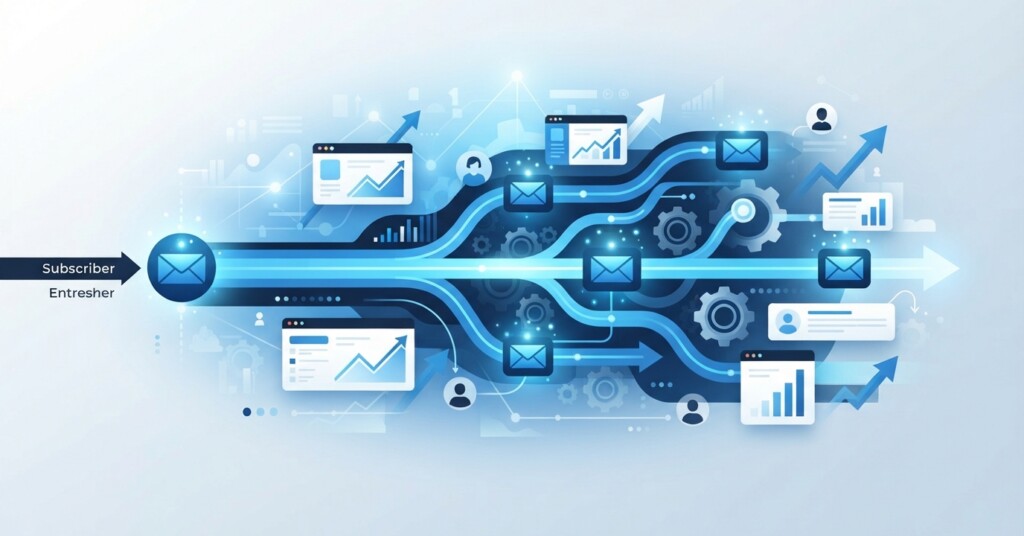
Most businesses treat email like a broadcast tool: write a message, blast it to everyone, hope someone clicks. But the marketers getting real revenue from email are doing something different. They are using email automation workflows — pre-built sequences that trigger automatically based on what a subscriber does — to guide people from ‘just signed up’ to ‘just bought.’ This article breaks down exactly how to build two of the most effective automated workflows: welcome sequences and drip campaigns. By the end, you will know what each one is for, how to structure them, what to write, and how to avoid the mistakes that make automated emails feel robotic instead of helpful.
Why Email Automation Workflows Matter More Than One-Off Sends
A single promotional email is a snapshot. An automation workflow is a conversation that unfolds over days or weeks, responding to what the subscriber actually does. Someone downloads a guide, joins your list, or abandons a cart — and instead of waiting for your next newsletter, a relevant message goes out immediately, while their interest is still warm. This timing advantage is the entire reason automated workflows consistently outperform standalone campaigns; welcome emails alone tend to generate several times the open and click rates of regular newsletters, simply because they arrive at the moment someone is most curious about you.
There are two workflow types every marketer should master first. A welcome sequence introduces new subscribers to your brand and moves them toward a first purchase or deeper engagement. A drip campaign is a broader category: any series of emails sent on a schedule or trigger, often used for nurturing leads, onboarding customers, re-engaging inactive subscribers, or recovering abandoned carts. A welcome sequence is technically a type of drip campaign, but it deserves its own treatment because it is usually the highest-performing, most-automated-yet-most-neglected asset in a marketer’s toolkit.
Building a Welcome Sequence That Actually Converts
A welcome sequence should do three jobs in order: confirm the subscriber made a good decision, build familiarity with your brand’s value, and guide them toward a specific next action. Trying to sell hard in email one is the most common mistake — subscribers have not built enough trust yet to act on a pitch.
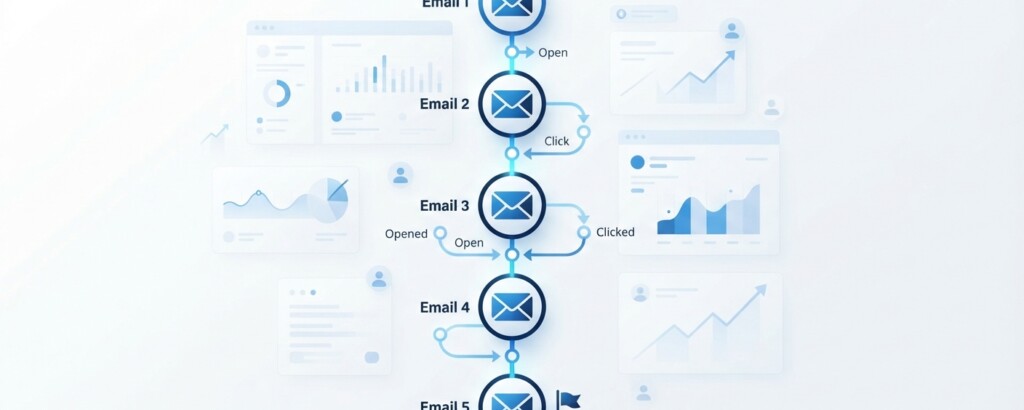
- Email 1 (sent immediately): Deliver what was promised — the discount code, the guide, the account confirmation — and set expectations for what emails will follow.
- Email 2 (1–2 days later): Tell your brand story or explain the problem you solve. Focus on relevance to the subscriber, not company history for its own sake.
- Email 3 (3–4 days later): Share social proof — a case study, review, or before-and-after example that shows real results.
- Email 4 (5–7 days later): Offer a low-friction next step, such as a product recommendation quiz, a free consultation, or a limited-time incentive.
- Email 5 (7–10 days later): Make a direct, time-bound offer or ask a clarifying question to segment engaged subscribers from passive ones.
A software company selling project management tools might use this exact structure: email one delivers login instructions and a quick-start checklist, email two shows a short story about a team that cut meeting time in half, email three shares a customer testimonial with specific numbers, email four invites the subscriber to book a quick onboarding call, and email five offers a discount on the paid tier before the free trial ends. Each email has one job and one call to action — not five competing links.
Keep each welcome email focused on a single call to action. When subscribers see three or four links competing for attention, click-through rates drop because the choice itself becomes a barrier. One email, one goal, one button.
Designing Drip Campaigns for Lead Nurturing and Re-Engagement
Once a welcome sequence ends, most subscribers still are not ready to buy. This is where broader drip campaigns take over — nurturing leads over a longer window, re-engaging people who have gone quiet, or recovering abandoned purchases. Unlike a welcome sequence, which is time-based from signup, many drip campaigns are behavior-triggered: they start when someone takes (or fails to take) a specific action.
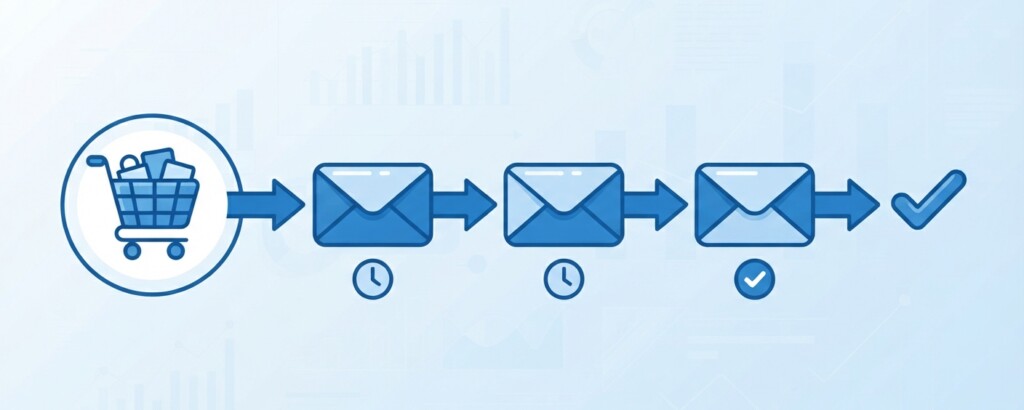
Three drip campaigns deliver outsized value for most businesses. Abandoned cart sequences remind shoppers about items left behind, typically across two or three emails spaced hours or days apart, often with urgency or a small incentive in the final message. Lead nurture sequences send educational content to subscribers who downloaded a resource but have not become customers, gradually building the case for your product through use cases and comparisons. Re-engagement or win-back sequences target subscribers who have not opened emails in 60–90 days, using a direct ‘are you still interested’ message before removing them from active lists — which protects your sender reputation and email deliverability.
| Workflow Type | Trigger | Typical Length | Primary Goal |
|---|---|---|---|
| Welcome Sequence | New subscriber or signup | 4–6 emails over 7–10 days | Build trust, drive first conversion |
| Abandoned Cart Drip | Cart created, no purchase | 2–3 emails over 24–72 hours | Recover lost sales |
| Lead Nurture Drip | Content download, no purchase | 5–8 emails over 3–6 weeks | Move lead toward buying decision |
| Re-Engagement Drip | 60–90 days of inactivity | 2–3 emails over 1–2 weeks | Reactivate or clean the list |
An online furniture retailer, for example, might run an abandoned cart drip where email one sends a gentle reminder two hours after checkout is abandoned, email two (sent the next day) answers a common objection like shipping cost or return policy, and email three (sent 48 hours later) offers free shipping if the order is completed within 24 hours. This kind of layered approach — reminder, objection handling, incentive — recovers meaningfully more revenue than a single reminder email alone.
Writing and Testing Emails That Convert, Not Just Get Opened
A high open rate means nothing if nobody clicks or buys. Every email in a workflow should be built around one conversion goal, and the subject line, preview text, and first sentence all need to work together to earn attention without misleading the reader. Personalization beyond ‘Hi [First Name]’ — referencing the specific product viewed, the resource downloaded, or the plan selected — consistently outperforms generic messaging because it signals the email was actually relevant to that person’s action.
Testing matters more in automated workflows than in one-off campaigns, because a single winning variant keeps paying off every time a new subscriber enters the sequence. Test one variable at a time: subject line, send timing, call-to-action wording, or email length. Give each test enough volume to reach statistical confidence before declaring a winner — a common mistake is calling a test after only a few dozen sends, which produces results driven by noise rather than a real difference in performance.
Do not set a workflow live and forget it. Automated sequences degrade over time as products change, offers expire, and links break. Review every active workflow at least quarterly, and immediately audit any sequence tied to a promotion or seasonal offer once that offer ends — sending an expired discount code is one of the fastest ways to damage trust.
Segmentation and Timing: The Details That Separate Good Workflows From Great Ones
Not every subscriber should get the same welcome sequence. Someone who signs up after reading a blog post about beginner topics has different needs than someone who signs up after viewing pricing pages. Basic segmentation — by signup source, stated interest, or industry if you collect it — allows you to branch subscribers into different versions of a workflow, which meaningfully improves relevance without requiring a completely custom sequence for every person.
Timing deserves equal attention. Sending all five welcome emails on a rigid daily schedule ignores subscriber behavior. Many email platforms support conditional logic: if a subscriber clicks the email two link, move them faster toward the offer; if they do not open email one, resend with a different subject line before continuing the sequence. This kind of branching keeps the workflow responsive rather than robotic, and it is the difference between a sequence that feels like a helpful guide and one that feels like a script being read at the subscriber.
| Average welcome email open rate | 50–60% |
| Average standalone newsletter open rate | 15–25% |
| Typical abandoned cart recovery rate (with 3-email drip) | 10–15% of abandoned carts |
| Estimated open rate lift from personalized subject lines | +15–20% |
These figures vary by industry and list quality, but the pattern holds consistently: automated, well-timed, and segmented emails outperform generic sends by a wide margin. The investment in building the workflow once pays back continuously, since every new subscriber or abandoned cart triggers the same optimized sequence without additional manual work.
Key Takeaways
- Email automation workflows send the right message at the right moment based on subscriber behavior, not a fixed calendar.
- Welcome sequences should build trust before asking for a sale — deliver value first, save the direct offer for later emails.
- Drip campaigns for abandoned carts, lead nurturing, and re-engagement each need different triggers, lengths, and goals.
- Every email needs one clear call to action; competing links reduce click-through rates.
- Segment subscribers where possible and use behavior-based branching to keep sequences relevant.
- Review and test workflows regularly — an automated sequence left untouched for a year is a liability, not an asset.
Building effective email automation workflows is not about writing more emails — it is about writing the right emails and letting your platform deliver them at the moment they matter most. Start with a single welcome sequence, measure how it performs against your regular sends, and expand into drip campaigns for cart recovery or lead nurturing once you have the fundamentals working. The businesses that treat email as an automated system rather than a manual chore are the ones seeing consistent, compounding returns from their list.
Ready to build workflows that actually drive revenue?
Explore more practical guides on email marketing, segmentation, and automation strategy to keep sharpening your skills.