
Ranking first on Google used to be the finish line. Today, the most prominent placement is the featured snippet, historically known as position zero. This article walks through exactly how featured snippets and other SERP features like People Also Ask boxes work, why they matter for traffic and visibility, and the specific formatting and research tactics you can use to earn them. By the end, you will have a repeatable process for identifying snippet opportunities, structuring content to win them, and tracking whether your efforts are paying off.
What Featured Snippets and SERP Features Actually Are
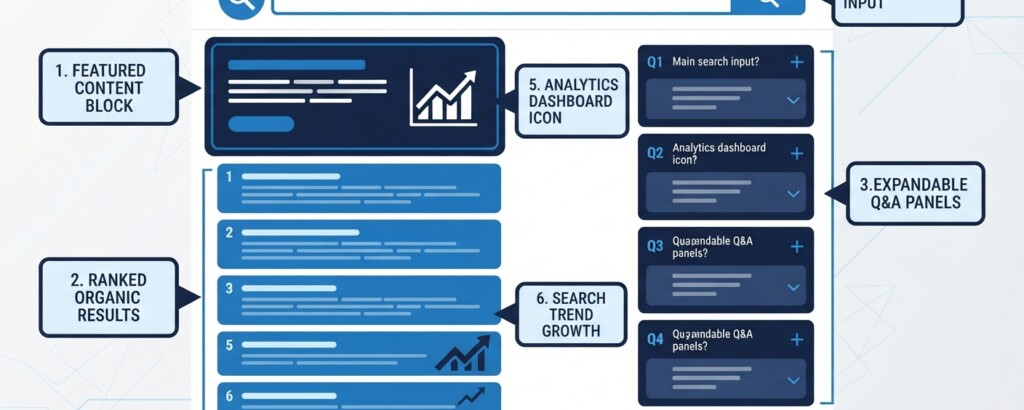
A featured snippet is the highlighted answer box that appears prominently at the top of Google search results. Historically nicknamed ‘position zero’ because it originally sat above the standard organic listings, Google deduplicated snippets in 2020 so that the snippet now occupies the number-one organic position rather than repeating lower on page one. Google pulls this content directly from a page it has already indexed and ranked, usually within the top ten results, and displays an excerpt along with the page title, URL, and sometimes an image. The goal is to answer the searcher’s question instantly, right on the results page. Featured snippets come in a few common formats: paragraph snippets (a short text answer), list snippets (numbered or bulleted steps), and table snippets (data organized in rows and columns). People Also Ask (PAA) boxes are a related but distinct feature—a stack of expandable questions related to the original search, each revealing a short answer pulled from a different page. Clicking one often loads more questions, so PAA boxes can expand almost infinitely. Other SERP features worth knowing include knowledge panels, image packs, local map packs, and video carousels. This article focuses specifically on featured snippets and PAA boxes because they are the most attainable for content marketers and have the clearest optimization path.
Featured snippets are not a separate ranking—Google selects them from pages already ranking in the top 10. If you are not ranking on page one, snippet optimization will not help yet. Fix your core ranking first.
Why Winning Position Zero Matters for Traffic
There is an ongoing debate about whether featured snippets help or hurt click-through rates, since some searchers get their answer without ever visiting a site. The reality is more nuanced. Studies from multiple SEO tools have found that pages elevated into the featured snippet often see a meaningful increase in overall click share—especially when leaping from positions two through ten—partly because the snippet elevates the page to the top of the organic results and adds a prominent visual anchor that draws the eye. There is also a compounding advantage: many featured snippets are read aloud by voice assistants like Google Assistant when someone asks a question verbally. As voice search usage grows, particularly for local and how-to queries, owning the snippet becomes the difference between being the only answer a user hears and not being mentioned at all. PAA boxes offer a different kind of value. Because they expand dynamically and often include ten or more related questions, they give you a map of exactly what your audience wants to know next. Appearing in multiple PAA entries for a topic cluster signals topical authority to both users and search engines, and each PAA appearance is another doorway into your site.
How to Find Snippet Opportunities
The most efficient way to win snippets is to target queries where a competitor already holds one but the answer is poorly formatted, incomplete, or outdated. Start by making a list of your priority keywords—ideally ones where you already rank in positions two through ten, since you are closest to displacing the current snippet holder. Run each keyword through an SEO tool such as Ahrefs, Semrush, or Moz and filter for queries that currently trigger a featured snippet. Most tools let you filter the entire keyword list this way, saving hours of manual searching. Pay close attention to question-based keywords (what, how, why, can, does) since these overwhelmingly trigger both snippets and PAA boxes. Manual research still matters. Search your target keyword yourself and read the current snippet closely. Ask: Is it actually answering the question well? Is it missing a step? Is the formatting clunky? Could I say this more clearly in fewer words? These gaps are your opening. For PAA boxes, click to expand several questions and note the new ones that appear. Tools like AlsoAsked and AnswerThePublic visualize these question chains, helping you build a content outline that answers an entire cluster of related queries in one article rather than guessing.
| Snippet Type | Best Content Format | Typical Query Pattern |
|---|---|---|
| Paragraph | 40-60 word direct answer near the top of the page | what is, why does, who is |
| List (numbered) | Step-by-step instructions with a clear H2 or H3 above the list | how to, steps to, ways to |
| List (bulleted) | Unordered list of items, features, or examples | types of, examples of, best |
| Table | HTML table with clear column headers | comparison, pricing, vs, specs |
| People Also Ask | Concise 1-3 sentence answer directly under a question-phrased subheading | any question-based long-tail query |
Structuring Content to Win Featured Snippets
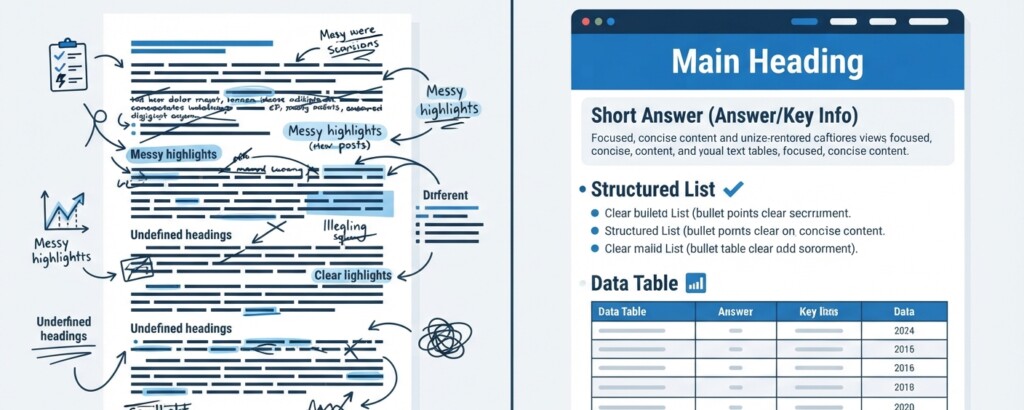
Once you know which format Google is favoring for a given query, structure your page to match it as closely as possible. For paragraph snippets, place a tight 40 to 60 word answer directly beneath a heading that mirrors the search query, then expand on it afterward with supporting detail. Google tends to pull the first clear, self-contained answer it finds, so do not bury it under three paragraphs of introduction. For list snippets, use actual HTML ordered or unordered list tags (
- or
- Identify keywords where you already rank in the top 10 but do not hold the snippet
- Check the current snippet format (paragraph, list, or table) and match your content structure to it
- Answer the target question directly within the first 40-60 words under a matching heading
- Use real HTML list and table markup instead of plain-text formatting
- Mirror exact question phrasing from People Also Ask boxes as subheadings
- Track snippet ownership monthly and update content when you lose a position
- Prioritize accuracy over brevity for sensitive or complex topics
- ), not just numbers typed into a paragraph. Google’s crawler reads the underlying HTML structure, and real list markup is far more likely to be extracted cleanly. Keep each list item short and start with a verb for how-to content.
For table snippets, build an actual HTML table with clear, descriptive column headers. Avoid merged cells or overly complex formatting—simple, scannable tables extract more reliably.
For PAA boxes, format your page using the exact question as an H2 or H3 subheading, then answer it in two or three concise sentences immediately below before elaborating. This is one of the few places in SEO where mimicking the searcher’s exact phrasing, rather than a polished rewrite, genuinely helps.
Across all formats, write for a featured snippet audience of one: someone who wants the answer fast. Resist the urge to pad the opening sentences with context, caveats, or brand messaging. Save nuance for after the direct answer.
Do not sacrifice accuracy for brevity just to fit a snippet format. Google has become more aggressive about removing snippets that oversimplify complex or YMYL (Your Money Your Life) topics like health, finance, and legal advice. If your topic has real nuance, prioritize correctness and let Google judge the formatting on its own terms.
Measuring and Maintaining Your SERP Feature Wins
Winning a snippet is not permanent. Google re-evaluates results constantly, and a competitor who improves their formatting or content depth can take the spot back within weeks. Build snippet tracking into your regular reporting rhythm rather than treating it as a one-time project. Most enterprise SEO platforms (Semrush, Ahrefs, Moz) include a featured snippet tracking report that shows which of your keywords currently hold the snippet, which ones you lost, and which competitors are winning snippets you do not yet have. Review this monthly alongside your regular keyword ranking report. In Google Search Console, you can get a rough signal of snippet performance by checking click-through rate for queries where you rank in position one but see unusually high impressions—this sometimes indicates a snippet is in place. It is not a perfect method since Search Console does not explicitly flag snippet ownership and records featured snippets as position one, but it is a useful supplementary check. When you lose a snippet, do not panic or rewrite the whole page. First check who took it and why: Did they add a table? A clearer list? Updated statistics? Match or exceed what they did, then wait for the next crawl cycle. Content freshness matters here too—pages updated recently tend to have a slight edge in snippet selection for time-sensitive topics.
A quick real-world example: a B2B software company targeting the query ‘what is a CRM’ noticed a competitor held the paragraph snippet with a vague, jargon-heavy definition buried in the third paragraph of their page. The company rewrote their intro to lead with a clean 45-word definition directly under an H2 reading ‘What Is a CRM?’, added a bulleted list of core CRM features below it, and updated the page’s publish date. Within three weeks, they had captured both the paragraph snippet and two related PAA entries, driving a reported 28 percent increase in organic traffic to that page without any new backlinks or keyword additions.
Key Takeaways on Featured Snippet and SERP Feature Optimization
Featured snippets and People Also Ask boxes reward clarity, structure, and direct answers more than raw keyword density or backlink volume. If you already rank on page one, snippet optimization is often the highest-leverage, lowest-cost SEO work you can do, because it requires formatting and editing rather than building new content from scratch. Focus on matching the exact format Google is already favoring, answer questions in the searcher’s own words, use proper HTML markup, and revisit your wins regularly since competitors are watching the same opportunities you are. Treat featured snippets as an ongoing maintenance task, not a one-time optimization, and you will build durable visibility at the very top of the search results.
Want to build a full SEO content strategy around SERP features?
Explore more practical guides on keyword research, content structure, and search optimization to keep growing your organic visibility.