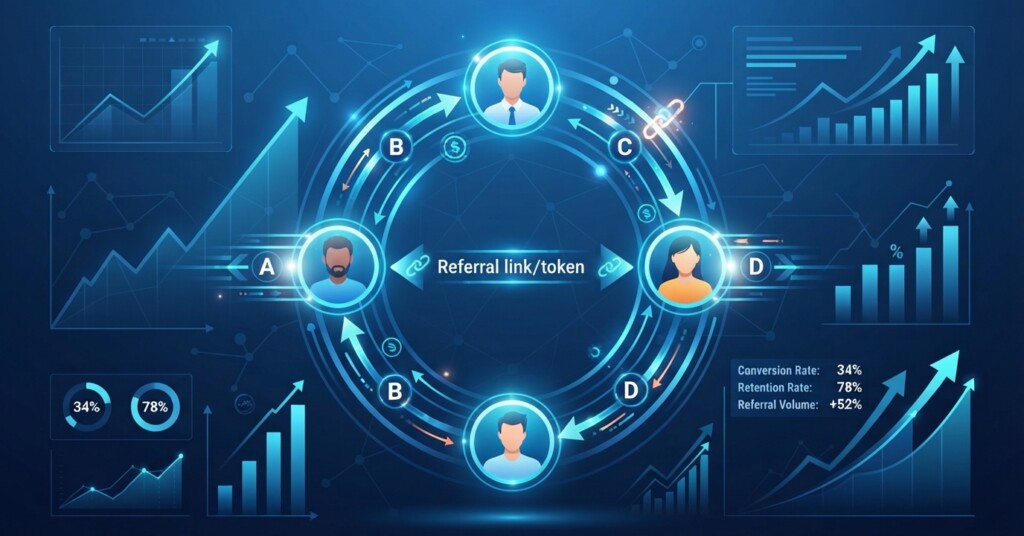
Every marketer wants cheaper customer acquisition, and referral program design is one of the few channels that gets cheaper as it scales. Unlike paid ads, where costs climb as you compete for the same audience, a well-built referral loop uses your existing customers to find new ones at a fraction of the cost — because the people making the introduction already trust your product and are doing the convincing for you. This article walks through how referral programs actually work, what separates a flop from a genuine viral loop, and how to structure incentives, mechanics, and tracking so the channel compounds instead of fizzles out.
Why Most Referral Programs Fail Before They Start
The typical referral program is a bolt-on afterthought: a generic ‘refer a friend’ link buried in an account settings page, offering a vague discount nobody remembers to use. It fails not because referrals do not work, but because the program was never designed as a loop — it was designed as a feature.
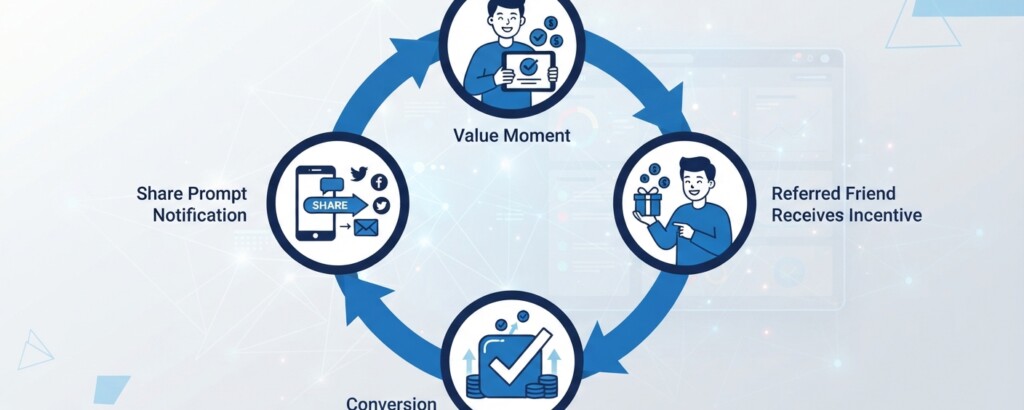
A viral loop has a specific mechanical shape: a customer gets value, is prompted to share at the moment that value is highest, the person they refer receives a compelling reason to act quickly, and that new person becomes a customer who repeats the cycle. If any link in that chain is weak — timing, incentive, friction, or follow-through — the loop breaks and the program quietly dies. Most companies only ever build the referral link and the reward; they skip the psychology of when and why someone shares.
The strongest referral moment is not after a purchase — it is right after a customer experiences a result. A customer who just hit a milestone, solved a problem, or got a compliment using your product is far more likely to share than one who just checked out.
The Anatomy of a Referral Program That Actually Spreads
Before choosing an incentive or a tool, map out the four components every referral system needs. Skipping any one of these is the most common reason programs underperform.
- Trigger moment — the specific point in the customer journey where satisfaction is highest and sharing feels natural, such as after a successful order, a positive support interaction, or hitting a usage milestone.
- Incentive structure — what the referrer and the referred friend each receive, and whether it is a double-sided reward (both parties benefit) or one-sided.
- Low-friction sharing mechanism — a unique, trackable link or code that can be shared via text, email, or social in one or two taps, with no manual entry required.
- Fast, visible payoff — the referrer sees proof the referral worked (a notification, a credited reward, a dashboard update) soon after their friend converts, reinforcing the behavior.
Notice that three of these four components have nothing to do with the reward amount. Marketers tend to obsess over how much to offer when the bigger lever is usually when you ask and how easy it is to act. A $50 incentive requested at the wrong moment, through a clunky five-step form, will underperform a $10 incentive offered instantly after a great customer experience with a one-tap share button.
Choosing the Right Incentive Structure
Incentive design is where most teams get stuck, mainly because there is no single right answer — it depends on your margins, your sales cycle, and what motivates your specific customer base. That said, a few patterns hold up consistently across industries.
| Incentive Type | How It Works | Best For | Watch Out For |
|---|---|---|---|
| Double-sided reward | Both the referrer and the new customer get a benefit (credit, discount, free month) | Subscription products, apps, services with recurring value | Can erode margin if reward value is too generous relative to customer lifetime value |
| One-sided reward (referrer only) | Only the person making the referral is rewarded | Low-margin products or one-time purchases | Weaker pull for the new customer, lower conversion on the referred side |
| Tiered or milestone rewards | Rewards increase as a customer refers more people (e.g., 1 referral = $10, 5 = $75) | Products with strong word-of-mouth potential and a passionate user base | Can feel like a sales job if not framed as a thank-you rather than a quota |
| Cash vs. product credit | Cash payouts versus store credit, extra features, or free months | Cash works broadly; credit works well when it reinforces continued use of your product | Cash can attract fraud and low-quality referrals seeking payout, not genuine advocacy |
A good starting rule: the reward should feel proportional to the effort and risk the referrer is taking by putting their reputation on the line. Asking a friend to try a $20 app is a small ask; asking them to switch accounting software for your business is a much bigger one, and the incentive — plus the trust-building content around it — needs to match that weight.
Avoid incentives large enough to attract people who only want the reward and have no real intent to use or recommend your product. Oversized payouts invite fraud, fake referrals, and low-quality signups that inflate your numbers without adding real revenue. Set reward caps and monitor referral-to-activation rates, not just referral-to-signup rates.
Real-World Examples Worth Studying
Dropbox’s early referral program is the textbook case for a reason: giving both the referrer and the new user extra storage space (rather than cash) tied the reward directly to the product’s core value, cost Dropbox very little per referral, and drove reported signup growth of around 60 percent during its growth phase. The lesson is not ‘give away storage’ — it is that the reward reinforced the product experience instead of feeling like a bribe.
Airbnb took a different but equally instructive approach, offering travel credit to both the host or guest making the referral and the new user, timed around the moment someone had just had a great trip. The emotional high of a good experience was the trigger; the credit was simply the mechanism that turned that feeling into action.
On the small business side, consider a local service business — a dentist, a boutique gym, a home cleaning company. These businesses rarely need complex software to run a referral program; a simple referral card handed out at checkout, or a text message sent a few days after a great appointment with a shareable link, can outperform a digital program that nobody remembers exists. The mechanics matter more than the sophistication of the tooling.
Tracking, Testing, and Scaling the Referral Channel
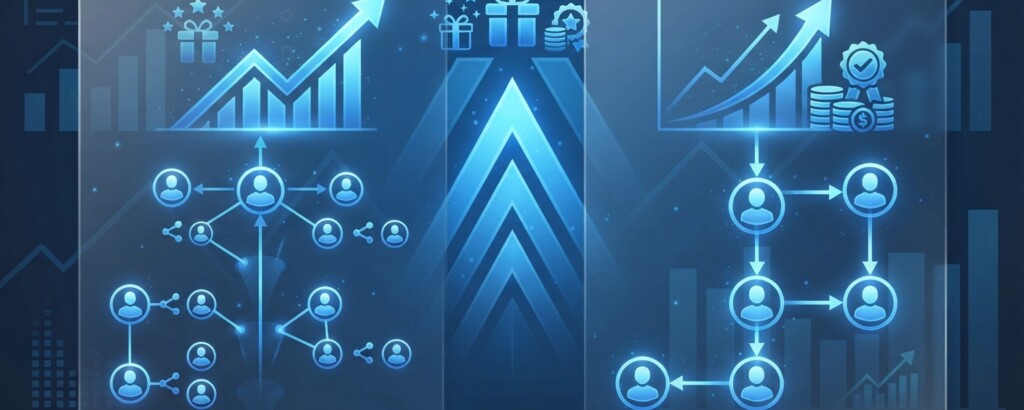
A referral program is a marketing channel, which means it needs the same measurement discipline you would apply to paid ads or email campaigns. The core metrics to track are referral rate (percentage of customers who make at least one referral), conversion rate of referred signups, cost per acquired customer through referral, and — critically — the lifetime value of referred customers compared to customers acquired through other channels. Referred customers frequently show higher retention and lifetime value because they arrived through trusted recommendation rather than an ad, which is a strong argument for investing more heavily in this channel once you have baseline data.
| New customers from referrals (monthly) | 120 |
| Average reward cost per successful referral | $15 |
| Total referral program cost | $1,800 |
| Average customer lifetime value (referred) | $340 |
| Total projected revenue from referred cohort | $40,800 |
Once you have a baseline, run structured tests: change the trigger timing, try a one-sided versus double-sided reward, or test a tiered structure against a flat one. Keep every other variable constant while testing so you can attribute changes in performance to the specific lever you adjusted. Most teams find their biggest performance jump comes not from the reward amount but from moving the ask closer to the customer’s peak satisfaction moment and reducing the number of clicks between ‘I want to share this’ and ‘I shared this.’
Segment your referral data by source and cohort. A referral program that works beautifully for your most engaged customers may fall flat with recent signups who have not yet experienced enough value to recommend you confidently. Match your ask to where each segment sits in their journey.
Key Takeaways
- Referral program design is not about the reward alone — it is a loop made of trigger timing, incentive structure, low-friction sharing, and fast visible payoff.
- The best moment to ask for a referral is right after a customer experiences value, not immediately after a transaction.
- Double-sided incentives generally outperform one-sided ones because they give the new customer a reason to act, not just the referrer a reason to ask.
- Oversized rewards attract low-quality, fraud-prone referrals; match incentive size to the effort and reputational risk involved for the referrer.
- Track referral rate, conversion rate, and lifetime value of referred customers separately from other channels, since referred customers often retain better.
- Test timing and friction reduction before testing bigger rewards — the mechanics usually move the needle more than the payout amount.
Referral program design rewards patience and iteration more than any other acquisition channel. It will rarely produce an overnight spike the way a paid campaign can, but once the loop is tuned, it keeps running with minimal ongoing spend, compounding every month as your customer base grows. Treat it as a core channel with its own budget, metrics, and testing calendar, and it will earn that investment back many times over.
Want to build a referral engine that actually compounds?
Explore more practical guides on customer acquisition, lifecycle marketing, and growth strategy to turn one-off tactics into a repeatable system.