
Market research used to mean weeks of manual work: reading competitor websites line by line, scrolling through hundreds of reviews, and squinting at spreadsheets trying to spot a pattern. AI-powered market research changes that math entirely. With the right tools, you can analyze competitor positioning, track emerging trends, and measure customer sentiment across thousands of data points in the time it used to take to review a handful of sources. This article walks through exactly how to do that, step by step, so you can apply it to your own brand or clients starting this week.
You will learn how AI tools scan and summarize competitor activity, how to spot market trends before they peak, how to measure what customers really think at scale, and how to turn all of that raw data into a usable strategy document your team will actually read.
Why AI Changes the Market Research Game
Manual market research often relies on informal sampling: reading ten reviews and assuming they represent a thousand, or checking three competitor pages to generalize about a category. That approach is not necessarily wrong, but it is incomplete and slow. AI-powered tools can ingest and process entire datasets rather than relying on small manual samples. A natural language processing model can scan thousands of reviews, comments, and public posts related to your category and surface patterns that a human would miss by skimming.
The practical benefit is speed combined with depth. A task that once took a research team two weeks, like mapping competitor messaging across ten brands, can now be compressed into an afternoon. That frees up time for the part that still requires a human: deciding what the data means and what to do about it.
AI tools are excellent at finding patterns in large volumes of text, but they are not good at knowing which patterns matter to your business. Always pair AI output with your own judgment about context, timing, and brand goals.
Analyzing Competitors at Scale
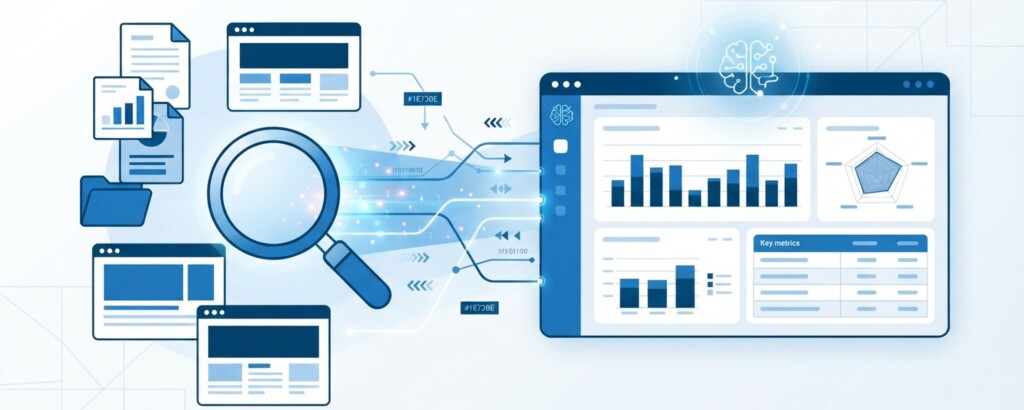
Competitor analysis traditionally focused on a few obvious things: pricing, website copy, and maybe a social media glance. AI tools let you go much deeper without much more effort. You can feed a tool every blog post a competitor has published in the last year and ask it to summarize their content themes, tone, and target keywords. You can pull ad data from public sources, such as official ad library APIs, and ask an AI model to categorize which offers competitors run most frequently to see what resonates.
A practical workflow looks like this. First, gather raw material: competitor website pages, blog archives, public ad registries like the Meta Ad Library, app store reviews if relevant, and social media posts from the last six to twelve months. Second, feed this material into an AI tool capable of summarization and pattern detection. Third, ask targeted questions rather than vague ones. Instead of asking what a competitor is doing, ask which three content topics appear most often, what tone of voice dominates their messaging, and which customer pain points they reference most in their copy.
A small business owner selling skincare products, for example, could feed a tool the product descriptions and customer-facing copy from five competitors. The output might reveal that four of the five competitors emphasize ingredient transparency while none mention shipping speed, which is a gap the business owner could fill in their own positioning.
Spotting Market Trends Before They Peak
Trend spotting is where AI tools genuinely outperform manual research, because trends often show up as small signals across many sources before they become obvious in any single one. A rise in search volume for a specific phrase, an increase in a certain type of comment across forums, or a spike in a hashtag can all be early indicators. AI tools designed for trend analysis, including some built into social listening platforms, can track these signals simultaneously and flag when something crosses a meaningful threshold.
Practically, this means setting up ongoing monitoring rather than one-off research projects. You can ask an AI-powered tool to track mentions of your product category across platforms like Reddit, review sites, and social networks weekly, and alert you when a new theme appears with growing frequency. This is different from a Google Trends check, because it captures the language customers actually use, not just the keywords you think to search for.
A marketing manager at a mid-sized software company used this approach to notice that customers across review sites were increasingly mentioning a desire for mobile-first functionality months before competitors added it to their roadmaps. That early signal gave the product and marketing teams a head start on both the feature and the messaging around it.
- Identify three to five platforms where your audience discusses your category, such as Reddit, review sites, and niche forums
- Set up an AI monitoring tool or API-compliant script to pull mentions on a weekly or biweekly basis
- Ask the AI tool to cluster mentions into themes rather than just listing raw quotes
- Track theme frequency over time to distinguish a passing comment from a real trend
- Cross-check any flagged trend against sales data or customer support tickets before acting on it
Measuring Customer Sentiment Without Reading Everything Yourself
Sentiment analysis is one of the most mature applications of AI in marketing research, and it is also one of the easiest to misuse. Done well, it gives you a reliable read on whether customers feel positively, negatively, or neutrally about your brand, and more importantly, why. Done poorly, it produces a single sentiment score that tells you almost nothing actionable.
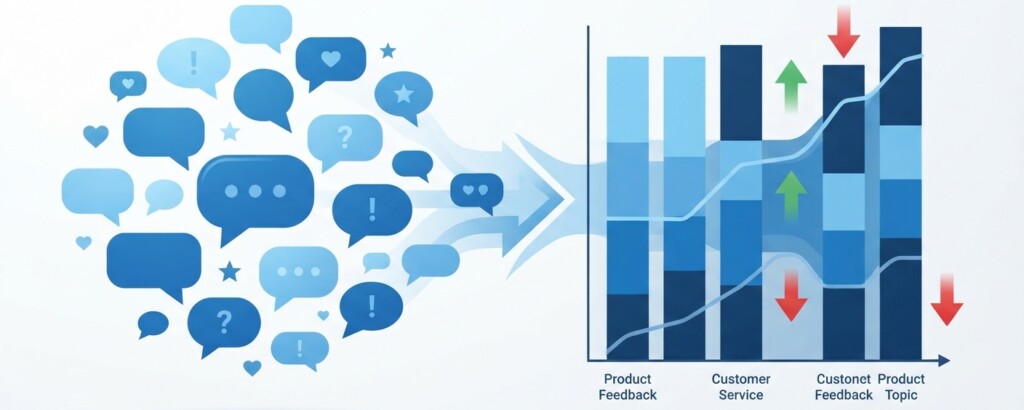
The useful version of sentiment analysis goes beyond a plus or minus score. You want the AI tool to tell you what specifically drives positive sentiment and what drives negative sentiment, broken down by topic. For a restaurant chain, that might mean separating sentiment about food quality from sentiment about wait times from sentiment about pricing. A single aggregate score might show the brand at a comfortable seventy percent positive, while a topic breakdown reveals that pricing sentiment has been declining steadily for three months, a signal the aggregate number would have buried.
To do this well, feed the AI tool a large volume of unstructured text: reviews, support tickets, social comments, and survey responses. Ask it to identify the top five to ten recurring topics, then score sentiment separately for each topic, and finally show you how that sentiment has shifted over a defined time period, such as month over month. This turns a vague feeling about brand reputation into a specific, trackable metric your team can act on.
| Research Task | Traditional Approach | AI-Powered Approach |
|---|---|---|
| Competitor content audit | Manually review 10-20 pages per competitor | Summarize hundreds of pages and flag recurring themes in minutes |
| Trend detection | Periodic manual search and intuition | Continuous monitoring with automated theme clustering |
| Sentiment analysis | Read a sample of reviews and estimate tone | Score sentiment by topic across the full dataset |
| Ad strategy review | Spot-check a few visible competitor ads | Catalog and categorize ad library activity systematically |
AI sentiment tools can misread sarcasm, regional slang, and mixed emotions, especially in short social media comments. Spot-check a sample of the AI-tagged results manually before presenting conclusions to stakeholders, particularly if the finding will influence a major budget or messaging decision.
Turning AI Research Into a Usable Strategy Document
Raw AI output, no matter how impressive, is not a strategy. The final and most important step is translating patterns into a short document your team can actually use. This means resisting the urge to paste every chart and data point the AI tool generates. Instead, pick the three or four findings most relevant to an upcoming decision, state them plainly, and attach a recommended action to each one.
A useful format is a one-page brief with three sections: what we found, why it matters, and what we recommend doing next. For example, if your AI competitor analysis found that rivals are heavily emphasizing free shipping in their ad copy while your brand has not tested that angle, state the finding, explain the likely impact on conversion rate, and recommend a specific A/B test with a timeline. This keeps the research grounded in action rather than becoming a report that sits unread in a shared drive.
Schedule AI-powered market research as a recurring task, not a one-time project. Monthly or quarterly check-ins catch shifts in competitor behavior and customer sentiment while they are still small enough to act on.
Key Takeaways
- AI-powered market research allows you to analyze comprehensive datasets instead of small manual samples, surfacing patterns manual review would miss
- Competitor analysis improves when you ask AI tools specific, targeted questions rather than open-ended ones
- Trend spotting works best as an ongoing monitoring process rather than a one-time search
- Topic-level sentiment analysis is far more actionable than a single aggregate sentiment score
- Always validate AI findings with a manual spot-check before using them to justify major decisions
- The final output should be a short, action-oriented brief, not a dump of raw AI-generated data
AI-powered market research is not about replacing marketing judgment, it is about giving that judgment better material to work with. Once you build a simple, repeatable process for analyzing competitors, tracking trends, and measuring sentiment at scale, you will spend far less time gathering information and far more time acting on it.
Keep Building Your Digital Marketing Skills
Want to go deeper on using AI across your marketing strategy, from content creation to campaign analytics? Explore more practical guides built for marketers who want clear, actionable knowledge.