
Every marketer has stared at a scheduled post at 2 a.m., wondering if it will land or launch a thousand screenshots. Corporate social media meltdowns happen more often than brands would like to admit, and studying them is one of the fastest ways to learn what not to do in your own content calendar. This article breaks down the most instructive brand social media fails, why they happened, and the practical safeguards you can build into your workflow so your brand does not become the next cautionary tweet thread.
You will learn the common patterns behind these meltdowns, the psychology of why bad posts go viral faster than good ones, a repeatable approval framework to catch mistakes before they publish, and how to recover if your brand already put a foot wrong. This is not about mocking the marketers involved — most of them were doing their best under pressure. It is about extracting the lessons so you do not repeat their mistakes.
Why Corporate Social Media Meltdowns Keep Happening
Social media moves fast, and that speed is exactly what causes trouble. Brands want to be timely, funny, and relatable, but the same instinct that makes a post feel current also shortens the time available for review. A community manager trying to jump on a trending meme or news event often has minutes, not days, to draft, approve, and publish. That compressed timeline is where judgment slips.
There is also a structural issue: many brands treat social media as a junior role with limited oversight, yet give that role access to a megaphone reaching millions of people. A single account manager, sometimes new to the company or the industry, is often the last line of defense between a clever idea and a public relations disaster. Add in shared login credentials, personal accounts occasionally mixed up with brand accounts, and tone-deaf attempts at humor around sensitive topics, and you have a recipe repeated across nearly every well-known meltdown.
A few recurring categories show up again and again in these incidents. Brands try to capitalize on tragedy or controversy with humor that lands as callous. Brands post during a crisis without checking the news cycle, so a scheduled promotional post appears right after a disaster. Brands let personal opinions or jokes slip through on a corporate account, sometimes because a personal and business account were confused. And brands respond defensively to customer complaints in a way that escalates rather than resolves the issue publicly.

Patterns Behind the Funniest and Most Cringe-Worthy Posts
Looking across widely shared brand fails, a handful of patterns explain most of them. Understanding these patterns is more useful than memorizing specific incidents, because the next meltdown will look different on the surface but follow the same underlying logic.
- Scheduled content colliding with real-world events — a cheerful promotional post goes out automatically right after breaking news, making the brand look oblivious or callous.
- Forced trend-jacking — a brand tries to insert itself into a meme, hashtag, or cultural moment it does not understand, producing humor that falls flat or offends.
- Account mix-ups — an employee posts something meant for a personal account on the company handle, often venting frustration or sharing an inside joke.
- Overly defensive customer service replies — instead of de-escalating a complaint, the brand account argues publicly, turning one unhappy customer into a viral screenshot.
- Humor about sensitive topics — jokes involving illness, tragedy, layoffs, or competitors’ misfortunes that read as mean-spirited rather than clever.
- Autocorrect or copy-paste errors — leftover placeholder text, wrong client names, or embarrassing typos that were never caught before publishing.
What makes these posts memorable is not just the mistake itself but the mismatch between the brand’s usual voice and the tone of the post. A financial services company trying to sound edgy, or a children’s brand making an off-color joke, creates a jarring contrast that audiences delight in sharing. The internet rewards incongruity, and corporate meltdowns are incongruity in its purest form.
Quick tip: Before publishing anything time-sensitive or trend-related, run a quick news check. Search the topic or hashtag you are referencing plus the word ‘controversy’ or ‘backlash.’ If anything concerning appears, hold the post.
A Practical Framework to Prevent Your Own Meltdown
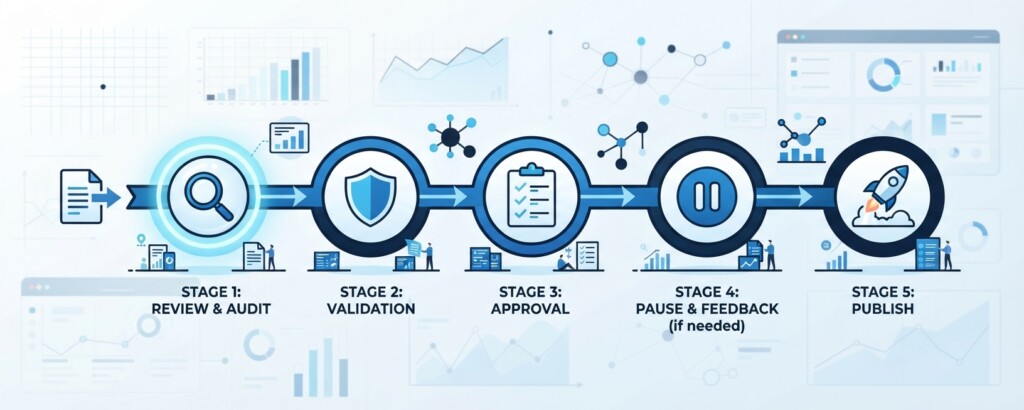
You cannot eliminate risk entirely, but you can build a review process that catches the vast majority of these mistakes before they go live. The framework below works whether you are a solo small business owner managing your own accounts or a marketing manager overseeing a team of five.
| Step | What to Check | Who Owns It |
|---|---|---|
| Array | Does the post match brand voice and current tone? Is humor appropriate for the audience? | Content creator |
| Array | Any breaking news, tragedy, or controversy related to the topic, hashtag, or timing? | Content creator |
| Array | Has someone other than the writer reviewed it for tone, spelling, and factual accuracy? | Team lead or peer |
| Array | Does the post touch on illness, death, layoffs, politics, or competitors? Extra scrutiny required. | Manager or legal/compliance if available |
| Array | If scheduled in advance, will it still make sense on the day it publishes? Pause auto-posts during major news events. | Whoever manages the scheduling tool |
| Array | Confirm you are logged into and posting from the correct account, not a personal profile. | Content creator |
Small businesses without a large team can simplify this into a two-person rule: nothing goes live without at least one other set of eyes, even if that means texting a screenshot to a co-founder or trusted colleague before hitting publish. This single habit prevents a huge percentage of embarrassing posts, because a second person almost always catches tone problems the original writer is too close to see.
It is also worth building a simple crisis pause protocol. When a major news event breaks — a natural disaster, a public tragedy, a significant political event — pause all scheduled posts across your channels until someone has reviewed the queue. Most social media management tools let you pause scheduling with one click. Make this a documented step in your team’s crisis response plan, not something you have to remember under pressure.
Never use humor tied to real tragedies, deaths, or active crises, even if a competitor or public figure is involved. What feels clever in a brainstorm often reads as exploitative once it is public, and screenshots last far longer than the post itself.
How to Recover If Your Brand Already Slipped Up
Even with strong processes, mistakes happen. What separates brands that recover quickly from those that spend months rebuilding trust is how they respond in the first hour after a post starts drawing negative attention.
First, do not delete and stay silent. Deleting a post without acknowledgment often looks like you are hiding rather than owning the mistake, and someone has usually already taken a screenshot. Instead, assess quickly whether the post needs to come down at all, or whether a follow-up correction and apology is sufficient.
Second, write a short, direct acknowledgment. Avoid corporate-speak phrases like ‘we regret any confusion this may have caused.’ Audiences respond far better to plain language: ‘We made a mistake with this post. It does not reflect our values, and we have removed it. We are sorry.’ Specificity and brevity read as sincere; vague hedging reads as damage control.
Third, loop in whoever handles communications or leadership before posting a public response, even if it takes an extra twenty minutes. A rushed apology that itself contains errors or a defensive tone can compound the original problem. At the same time, do not let the response sit for days — the sweet spot for most incidents is responding within a few hours while the conversation is still active, rather than after it has already moved on without you.
Finally, treat every meltdown, big or small, as a case study for your team. Hold a short debrief: what happened, why did the review process not catch it, and what specific change will prevent it next time. This turns an embarrassing moment into a genuine improvement to your workflow rather than just a story people bring up at meetings.
If a post is gaining negative traction, resist the urge to argue with individual commenters. Address the issue once, clearly, in an official statement or pinned reply, and then step back rather than engaging in a public back-and-forth.
Key Takeaways
- Corporate social media meltdowns almost always trace back to speed, weak review processes, or humor misjudged for the moment.
- Build a simple, repeatable approval step — even a two-person rule — before anything publishes, especially trend-related or time-sensitive content.
- Pause scheduled posts during major news events so cheerful promotions do not collide with tragedy or controversy.
- If a mistake goes live, respond quickly, plainly, and without corporate jargon rather than deleting silently.
- Use every incident, yours or a competitor’s, as a real training example for your team’s future content decisions.
Studying corporate social media meltdowns is not just entertainment — it is one of the more efficient ways to sharpen your own judgment as a marketer. The brands behind these posts were not incompetent; they were often rushed, under-resourced, or simply human. Building a small amount of structure into your publishing process is usually enough to avoid joining the list.
Want more practical marketing frameworks like this?
Explore our library of guides covering content strategy, social media management, and crisis-proof marketing workflows built for real teams with real deadlines.