
If you have ever tried to market to ‘everyone’ and watched your budget disappear with nothing to show for it, you already understand why the STP framework matters. STP stands for Segmentation, Targeting, and Positioning, and it is one of the oldest, most reliable tools in marketing strategy. For small teams and solo marketers, it is also one of the most underused, mostly because it sounds like something built for large corporations with research departments. It is not. Done right, STP is exactly what a lean team needs to stop wasting money on the wrong audiences and start speaking directly to the people most likely to buy.
In this article, you will learn what each part of STP actually means in practice, how to apply it with limited time and no research budget, and how to avoid the common mistakes that turn this framework into a theoretical exercise instead of a working tool. By the end, you should be able to sit down with your own customer list or product and build a simple, usable STP map in an afternoon.
What the STP Framework Really Means
Segmentation means dividing your total market into smaller groups of people who share similar characteristics, needs, or behaviors. Targeting means choosing which of those groups you will actually focus on, because you cannot serve all of them equally well. Positioning means deciding how you want your product or service to be perceived in the minds of that chosen group, relative to the alternatives they could choose instead.
The order matters. Many teams skip straight to positioning, writing taglines and value propositions before they have decided who those words are even for. That is backwards. Segmentation tells you who exists in your market. Targeting tells you who you are going to pursue. Positioning tells you what you will say to win them. Skip a step and the ones after it are built on guesswork.
Quick gut check: if your current marketing message could apply to almost any business in your category, you probably have a positioning problem rooted in a segmentation and targeting gap. Strong positioning only works when it is aimed at a specific group.
Segmentation: Finding the Groups Hiding in Your Market
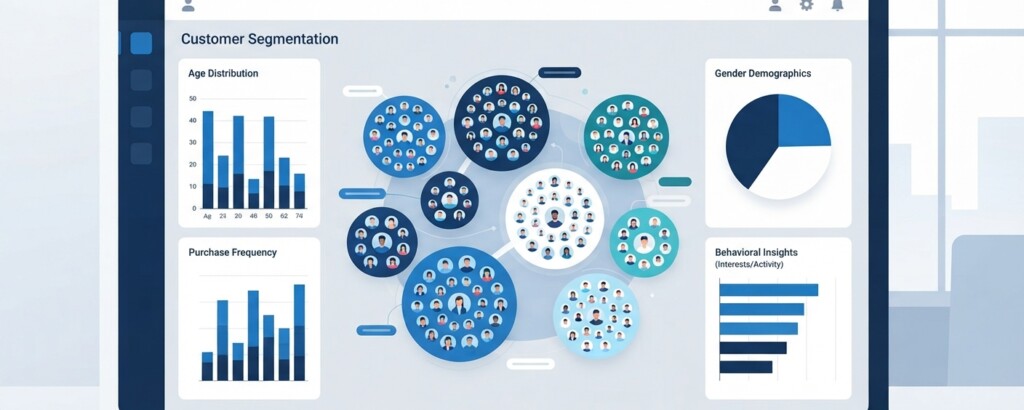
Segmentation does not require a market research firm. It requires you to look at the data you already have, such as your customer list, website analytics, email subscribers, or even sales conversations, and organize people into meaningful groups. There are four common ways to segment a market, and most practical segmentation blends two or three of them.
- Demographic: age, income, job title, company size, industry
- Geographic: country, region, urban versus rural, time zone
- Psychographic: values, priorities, attitudes toward risk, lifestyle
- Behavioral: purchase frequency, product usage, loyalty, how they found you
A resource-strapped team should start with behavioral and demographic segmentation first, because that data usually already exists in your CRM, email platform, or e-commerce dashboard. For example, a small accounting software company might notice two distinct behavioral clusters in its customer base: freelancers who sign up and self-serve within a day, and small business owners who book a demo call before buying. Those two groups have different needs, different objections, and different buying speeds, even though both are technically ‘small business customers.’
The goal of this stage is not to produce a perfect, exhaustive map of every possible segment. It is to produce three to five segments you can actually describe in a sentence each. If you cannot summarize a segment in one sentence, it is probably still too broad or too vague to be useful later.
Avoid segmenting purely on demographics like age or gender when those traits do not actually predict behavior for your product. A 35-year-old and a 55-year-old might buy your project management tool for identical reasons. Segmenting on something that does not change the message or channel is wasted effort.
Targeting: Choosing Where to Spend Your Limited Energy
Once you have segments, targeting is the discipline of picking which ones deserve your attention first. This is the step small teams most often get wrong, usually by trying to target everyone at once because narrowing feels like leaving money on the table. In reality, trying to serve every segment with the same budget and the same messaging usually means you serve none of them well.
A practical way to evaluate segments is to score each one against a short list of criteria: how large is the segment, how profitable is it likely to be, how easy is it to reach with your current channels, and how well does your product already fit their needs. A segment that scores high on size but low on reachability and fit is often a trap. It looks appealing on paper but will drain your budget without converting.
| Segment | Size | Reachability | Product Fit | Priority |
|---|---|---|---|---|
| Freelancers, self-serve buyers | Large | High (search, social ads) | Strong | Primary target |
| Small business owners, demo-first | Medium | Medium (requires sales outreach) | Strong | Secondary target |
| Enterprise procurement teams | Small | Low (long sales cycles) | Weak | Deprioritize for now |
Notice that the table above does not just rank by size. A large segment with poor fit or poor reachability is often a worse choice than a smaller segment you can actually reach and convert efficiently. For a team with limited ad spend and no dedicated sales staff, chasing the enterprise segment in the example above would likely burn the whole budget on a handful of long, uncertain sales cycles.
A useful rule for lean teams: pick one primary target segment to build your core campaigns around, and at most one secondary segment to test in parallel. Anything beyond that spreads your budget too thin to learn anything reliable from the results.
Positioning: Saying the Right Thing to the Right Group
Positioning is where segmentation and targeting pay off. Once you know exactly who you are talking to, you can write a message that speaks to their specific situation instead of a generic pitch meant to appeal to everyone. A simple and widely used positioning template looks like this: ‘For [target segment], who [key need or problem], [product name] is the [category] that [key benefit], unlike [main alternative], because [reason to believe].’
Using the accounting software example, a positioning statement for freelancers might read: ‘For freelancers who dread tracking invoices and taxes manually, InvoiceEasy is the accounting tool that handles tax categorization automatically, unlike spreadsheets or generic bookkeeping apps, because it is built specifically for single-person businesses from the ground up.’ That statement would read very differently if written for the small business owner segment, where trust, team access, and support might matter more than automation speed.
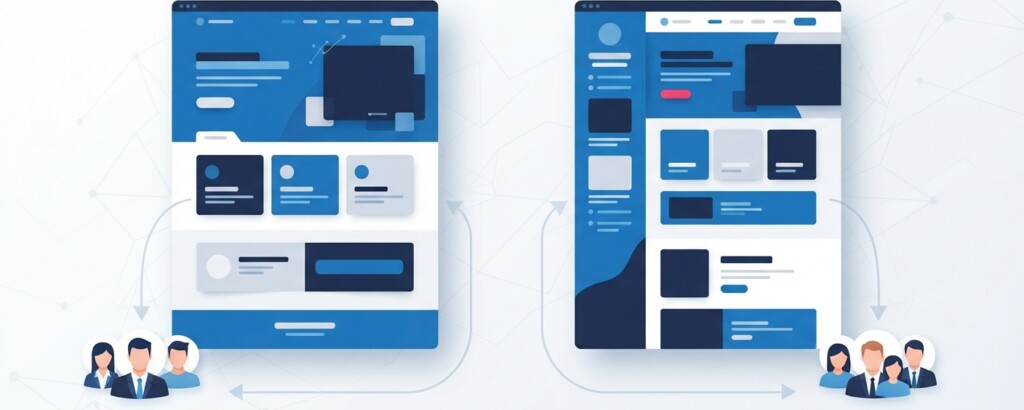
Positioning should show up consistently across your website headlines, ad copy, email subject lines, and even your sales scripts. If your homepage talks to freelancers but your paid ads target small business owners with a demo call offer, you are sending mixed signals that confuse both segments and waste ad spend. Consistency across channels is what makes positioning actually stick in someone’s mind rather than feeling like a one-off slogan.
Keeping the STP Framework Alive With Limited Resources
The biggest risk for small teams is not building an STP framework but building it once and never revisiting it. Markets shift, customer bases grow, and the segment that was your best fit a year ago may no longer be your most profitable one. A lightweight way to keep STP current is to review it quarterly, using whatever data is easiest to pull: which segments are converting at the highest rate, which ones are generating support tickets or complaints, and which ones are driving referrals.
You do not need a full market research project to update your STP map. A 30-minute review of your analytics dashboard and a scan of recent customer feedback is often enough to confirm whether your target segment and positioning still hold up, or whether a new segment has started to emerge that deserves attention.
Do not confuse a loud segment with a profitable one. The group that emails you the most or comments the most on social media is not automatically your best target. Check actual conversion and retention data before shifting your targeting based on noise.
Key Takeaways
- Segmentation groups your market by shared traits or behaviors; use data you already have before investing in new research.
- Targeting means choosing one primary segment and at most one secondary segment to focus your limited budget and messaging on.
- Positioning only works once targeting is clear; write it using a simple template that names the segment, the need, and the reason to believe.
- Keep positioning consistent across your website, ads, and emails so the message reinforces itself across every touchpoint.
- Revisit your STP framework quarterly using existing analytics rather than treating it as a one-time exercise.
The STP framework is not a theoretical model reserved for big brands with research budgets. For a resource-strapped marketing team, it is one of the fastest ways to stop guessing and start spending every dollar and every hour on the people most likely to respond. Segment with the data you already have, target the group you can realistically serve well, and position your product with language built for that specific audience. That is the entire discipline, and it scales down to a team of one just as well as it scales up to a team of fifty.
Want more frameworks like this one?
If the STP framework was useful, explore our other practical guides on marketing strategy, segmentation, and campaign planning built specifically for lean teams and growing businesses.