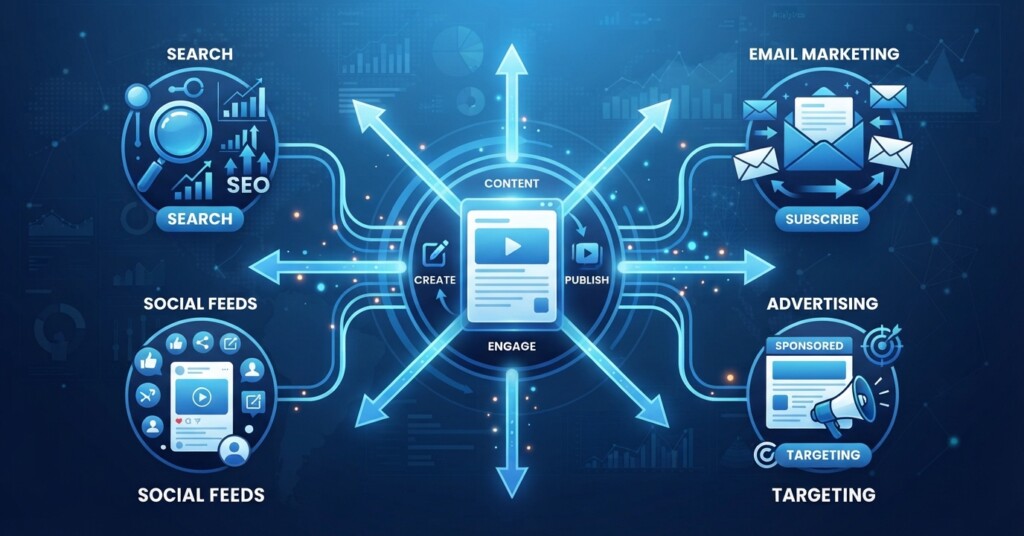
Hitting publish is the easy part. The real work of a content distribution strategy starts after that, when you have to get the piece in front of people who did not know to go looking for it. Most marketing teams spend 80 percent of their time and budget creating content and 20 percent sharing it, which is almost exactly backward. This article walks through how to flip that ratio: the channels worth prioritizing, a repeatable checklist you can run for every piece of content, how to repurpose one asset into many, and how to tell whether your distribution efforts are actually working.
Why Content Distribution Strategy Matters More Than Content Creation
Good content with no distribution plan is a tree falling in an empty forest. You can write the most thorough guide on your topic, but if your only promotion plan is a single social post and an email blast, you are relying on luck. Algorithms on search engines, social platforms, and email inboxes are all designed to filter, not amplify, so the burden falls on the marketer to push content toward the right audience rather than hoping it gets discovered. Think of distribution as a budget line, not an afterthought. Teams that treat it this way typically plan distribution before they finish the draft, mapping out which channels, formats, and partners will carry the piece before a single word is written. This forces a useful discipline: if you cannot picture who will share a piece of content and where, that is a signal to rethink the content itself.

The Three Types of Distribution Channels: Owned, Earned, and Paid
Every distribution channel falls into one of three buckets. Owned channels are ones you control directly, such as your website, blog, email list, and social profiles. Earned channels are attention you get without paying for it directly, like shares, backlinks, press mentions, and word of mouth. Paid channels are placements you buy, including search ads, social ads, sponsored content, and influencer partnerships. A mature content distribution strategy uses all three, but in a specific order. Owned channels come first because they require no direct ad spend and offer the greatest direct control. Earned channels follow, built through outreach and relationships. Paid channels are layered on top to accelerate reach for your best-performing pieces, not every piece, since budget is finite and not every asset deserves an ad spend.
| Channel Type | Examples | Best For | Typical Cost |
|---|---|---|---|
| Owned | Blog, email list, YouTube channel, company social accounts | Building long-term audience and SEO equity | Low, mostly time |
| Earned | Backlinks, guest posts, press mentions, organic shares | Credibility and reach beyond your existing audience | Low cost, high effort |
| Paid | Search ads, social ads, sponsored newsletters, influencer deals | Fast reach and testing new audiences | Variable, scales with budget |
Tip: Before publishing anything, write down three specific places you will distribute it and who is responsible for each. If you cannot name three, the content plan is not finished yet.
Building a Repeatable Distribution Checklist
The teams that distribute content well are not more creative than everyone else — they just run the same checklist every time so nothing gets skipped. Here is a version you can adapt for your own workflow.
- Optimize the piece for search before publishing, including title tags, headers, and internal links to and from related content
- Send it to your email list within 24 hours, with a subject line written for the inbox, not copied from the headline
- Post it across every relevant owned social channel, rewriting the copy for each platform instead of posting the same text everywhere
- Reach out to five to ten people or publications who might find it useful enough to share or link to
- Repurpose the core ideas into at least two secondary formats, such as a short video, a carousel, or a slide deck
- Add it to relevant internal resources, like a help center, onboarding emails, or a resources page
- Submit it to niche communities or forums where the topic is actively discussed, following each community’s rules
- Schedule a second and third round of social promotion two and four weeks after publish, since most audiences miss the first post
- Track performance at the two-week mark and adjust promotion based on what is gaining traction
Repurposing: Getting More Mileage from Every Piece of Content
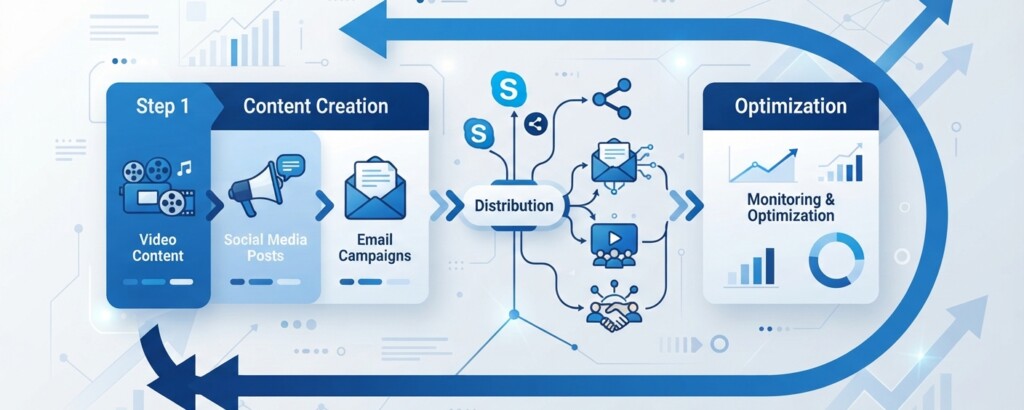
One well-researched article can become a week’s worth of social posts, an email sequence, a short video script, and a slide deck for a webinar. Repurposing is not about recycling the same message everywhere; it is about translating the same core idea into the format each audience actually prefers. A LinkedIn audience wants a tight, text-based insight. A YouTube or TikTok audience wants a visual walkthrough. An email subscriber wants a direct, personal framing of why the content matters to them specifically. A practical example: a 2,000-word guide on email segmentation can be broken into a five-slide LinkedIn carousel, a three-email nurture sequence for new subscribers, a short explainer video for YouTube Shorts, and a one-page checklist offered as a lead magnet. That is four additional distribution assets from a single piece of research, each reaching people who might never have found the original article.
Do not post identical, unedited content across every platform. Audiences on different platforms expect different tones and formats, and reposting the exact same text everywhere signals low effort, which can hurt engagement and, on some platforms, visibility in the algorithm.
Measuring What Actually Works
Distribution without measurement just becomes guesswork repeated indefinitely. Track a small set of metrics for each channel rather than drowning in vanity numbers. For owned channels, look at traffic sources, time on page, and email click-through rate. For earned channels, track referral traffic, new backlinks, and brand mentions. For paid channels, track cost per click, cost per lead, and downstream conversion, not just impressions. Review this data on a cadence, not just once. A piece that underperforms in week one might catch on after a second promotion push or after an influencer shares it unexpectedly. Keep a simple spreadsheet or dashboard that logs which channel drove which result for each piece of content, so over time you build a clear picture of where your specific audience actually spends attention, rather than relying on generic best practices.
Key Takeaways: Making Content Distribution Strategy a Habit
A strong content distribution strategy is less about finding one magic channel and more about running a consistent process across owned, earned, and paid channels every time you publish. Plan distribution before you write, use a repeatable checklist so nothing gets skipped, repurpose every major piece into multiple formats, and measure results by channel so your effort shifts toward what is actually working. Content creation gets you a finished asset; distribution is what turns that asset into traffic, leads, and brand awareness. Treat it with the same rigor you give the writing itself, and the return on every piece of content you produce will compound over time.
Want help building a distribution system that actually scales?
Explore more practical guides on content marketing, SEO, and paid promotion to round out your distribution playbook.