

A website or digital platform is more than just design and content. It must communicate clearly, guide users, build trust, and deliver value. Many digital experiences fail not because of poor traffic, but because the experience itself is confusing or misaligned with user needs.
The 7Cs Framework provides a structured way to evaluate and improve digital experiences, especially websites and online platforms.
In this guide, you’ll learn:
- What the 7Cs Framework is
- What each “C” means
- How it applies to digital marketing and UX
- Practical examples you can use immediately
What Is the 7Cs Framework?
The 7Cs Framework is a model used to assess and design effective digital experiences, particularly websites and online platforms. It focuses on how users interact, engage, and build trust with a digital presence.
The 7Cs are:
- Context
- Content
- Community
- Customization
- Communication
- Connection
- Commerce
Each element plays a role in creating a cohesive and user-friendly digital experience.
Why the 7Cs Framework Matters
The 7Cs Framework helps businesses:
- Improve website usability and clarity
- Align digital experiences with user expectations
- Increase engagement and conversions
- Identify gaps in digital strategy
- Create consistent, trust-building experiences
It is widely used in UX design, digital marketing, e-commerce, and platform strategy.
Context: Structure and Design
What It Means
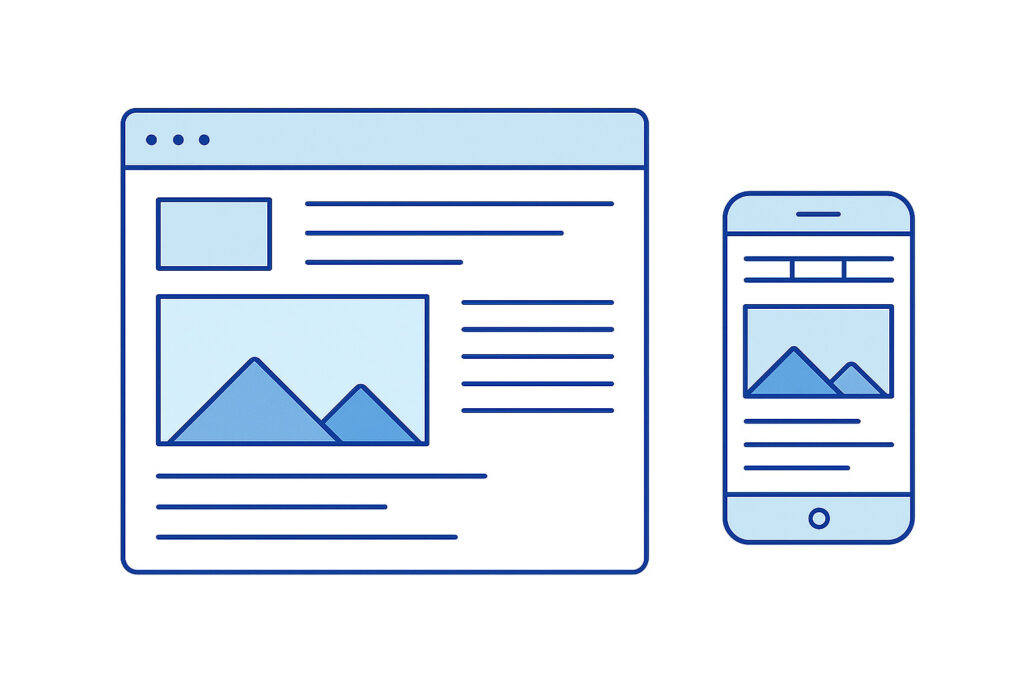
Context refers to the overall layout, navigation, and design of a website or platform.
Key Considerations
- Clear navigation
- Logical page structure
- Mobile responsiveness
- Fast loading times
- Visual consistency
Practical Example
An e-commerce website with clear menus, intuitive filters, and fast page loads creates a smooth shopping experience that keeps users engaged.
Content: Information and Value

What It Means
Content includes all information presented to users, such as text, images, videos, and downloads.
Key Considerations
- Relevance and usefulness
- Clear messaging
- SEO-optimised content
- Visual support (images, videos)
- Updated and accurate information
Practical Example
A blog that publishes in-depth tutorials and guides builds trust and positions the brand as an authority.
Community: User Interaction
What It Means
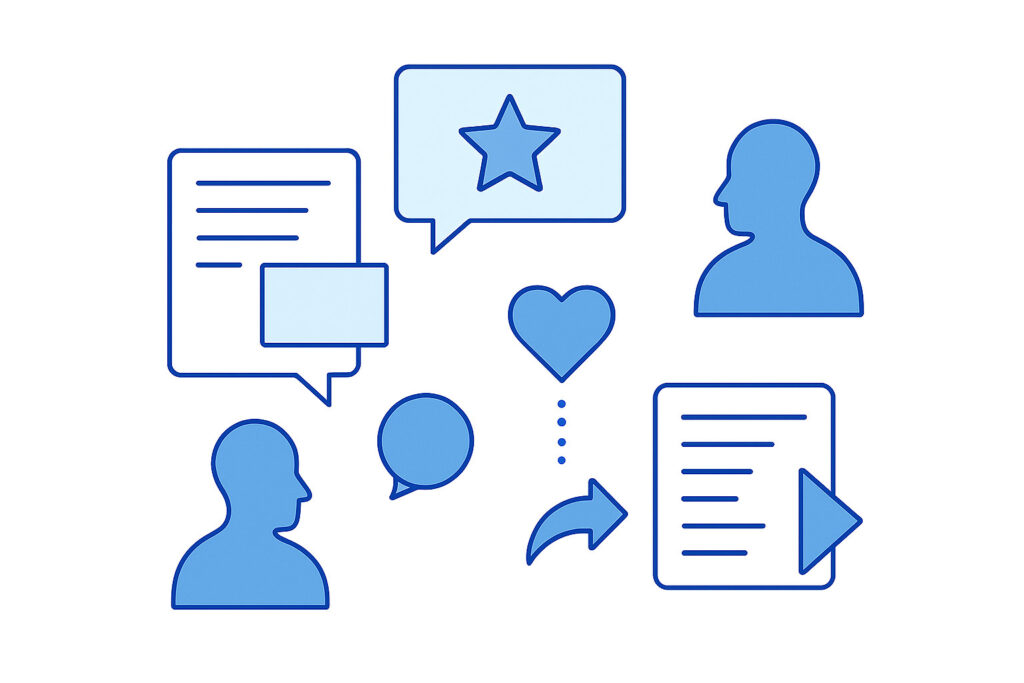
Community focuses on user-to-user interaction and social engagement.
Key Considerations
- Comments and reviews
- Forums or discussion areas
- Social sharing
- User-generated content
Practical Example
A SaaS platform with an active user forum allows customers to share tips and solve problems together.
Customization: Personalised Experience
What It Means
Customization refers to tailoring content or experiences to individual users.
Key Considerations
- Personalised recommendations
- User preferences
- Behaviour-based content
- Location or language settings
Practical Example
An online store recommending products based on browsing history increases relevance and conversions.
Communication: Two-Way Interaction
What It Means
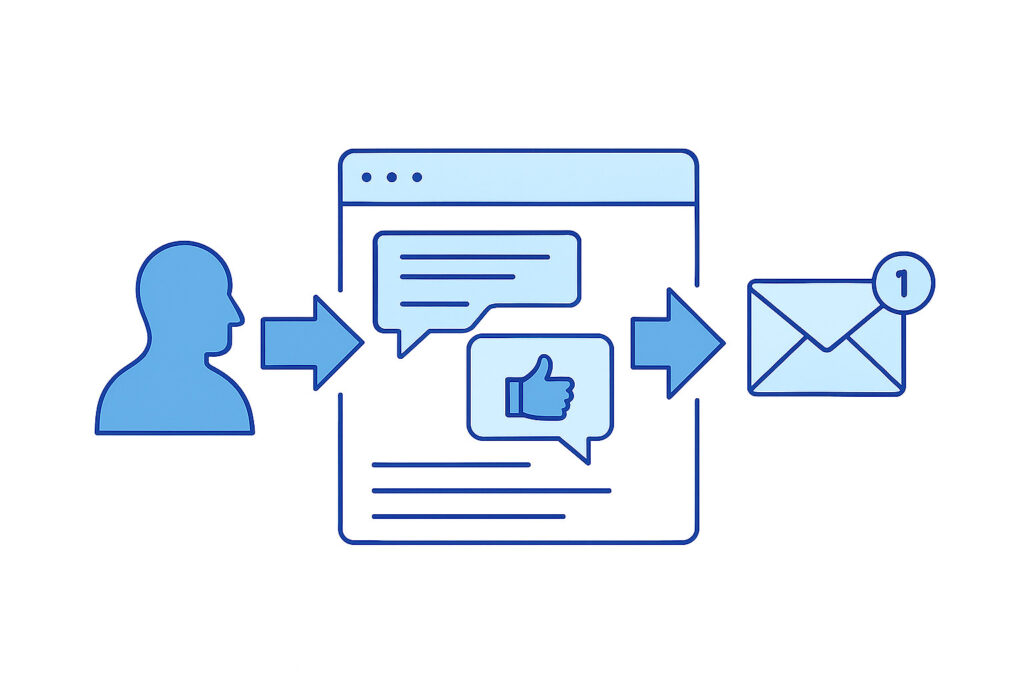
Communication is how the platform interacts directly with users.
Key Considerations
- Email notifications
- Chat support or chatbots
- Feedback forms
- Push notifications
Practical Example
A website using live chat to answer customer questions improves trust and reduces friction.
Connection: External Links and Integrations
What It Means
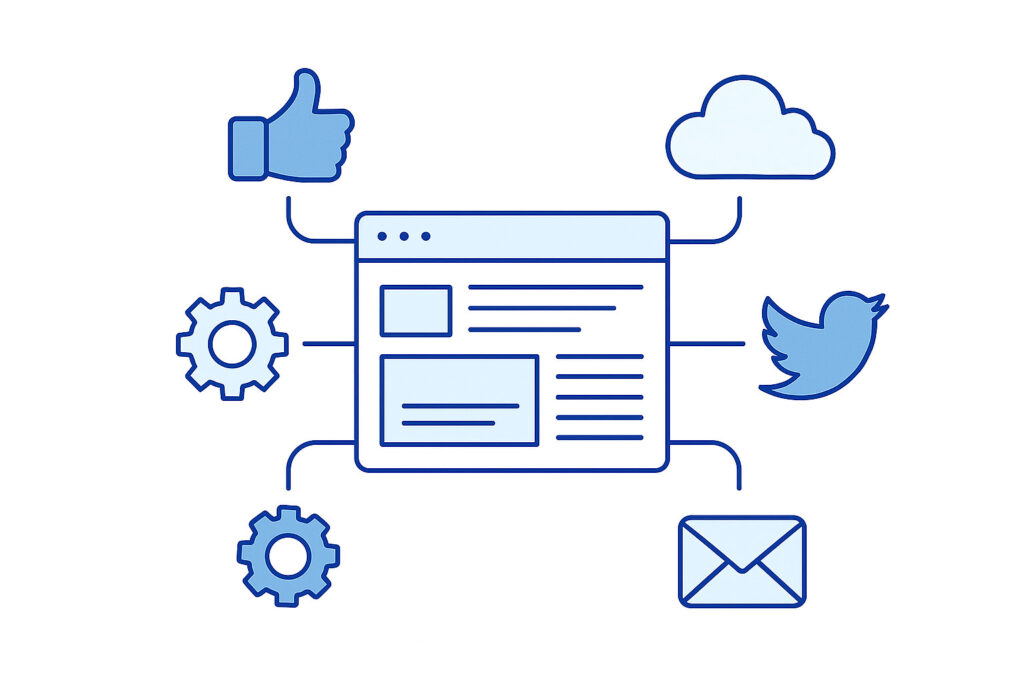
Connection refers to links and integrations with external platforms and services.
Key Considerations
- Social media integration
- External resources and references
- API connections
- Partner platforms
Practical Example
A blog linking to credible external sources and sharing content on social media improves reach and credibility.
Commerce: Transactions and Value Exchange

What It Means
Commerce covers transactional functionality and monetisation.
Key Considerations
- Secure payment systems
- Clear pricing
- Smooth checkout process
- Subscription or membership models
Practical Example
A digital product website with transparent pricing and a simple checkout increases conversion rates.
How the 7Cs Work Together
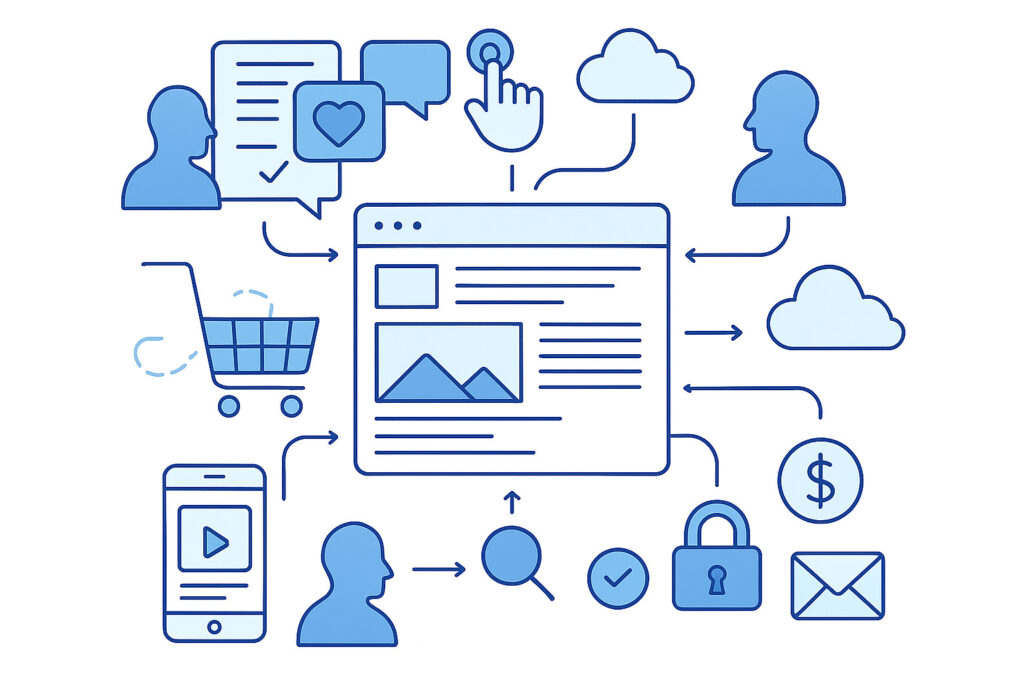
The power of the 7Cs Framework comes from balance. Weakness in one area affects the entire experience.
For example:
- Great content with poor context frustrates users
- Strong commerce without trust damages conversions
- Community without moderation harms credibility
A strong digital experience aligns all seven elements.
Applying the 7Cs Framework in Practice
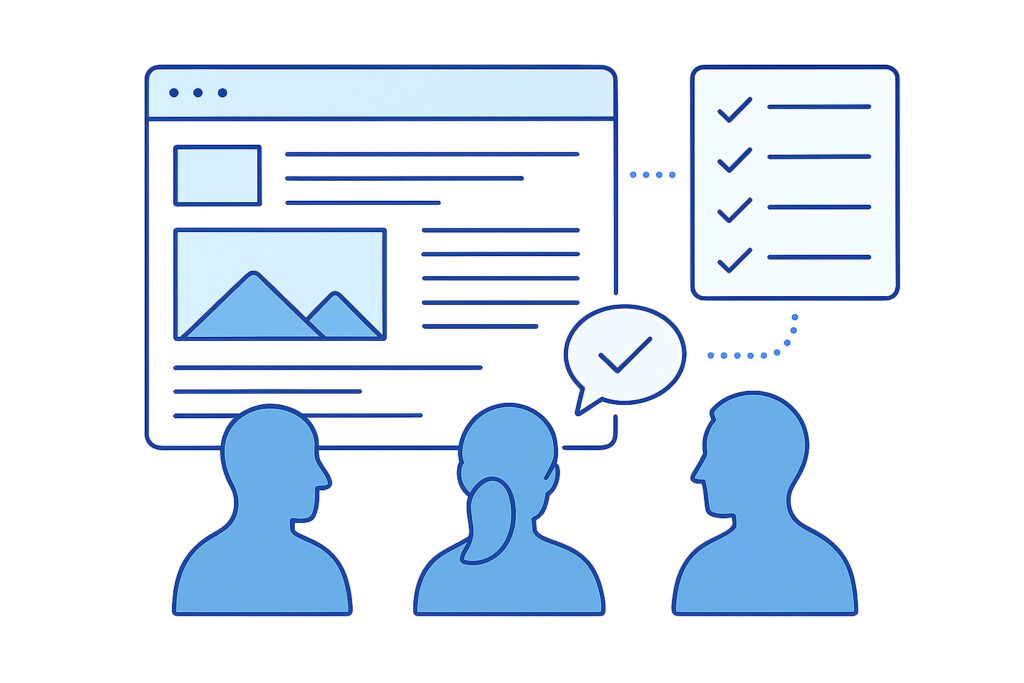
A simple way to use the framework:
- Audit your website using each “C”
- Identify gaps or weaknesses
- Prioritise improvements
- Test and optimise regularly
This approach works for:
- Website redesigns
- UX audits
- Conversion optimisation
- Digital strategy planning
Final Thoughts

The 7Cs Framework provides a practical lens for evaluating and improving digital experiences. It shifts focus from isolated tactics to a holistic view of user interaction.
By paying attention to:
- Structure
- Value
- Engagement
- Personalisation
- Communication
- Integration
- Transactions
businesses can create digital platforms that are not only functional, but also effective, engaging, and trustworthy.
Leave a Reply