
Many digital marketing plans fail not because teams lack tools or creativity, but because they lack a clear planning structure. Activities are executed without alignment, objectives are unclear, and results become difficult to measure.
The SOSTAC® framework solves this by providing a logical, step-by-step model for planning, executing, and controlling digital marketing strategies.
In this guide, we’ll break down each element of SOSTAC®, explain how it works in practice, and show how businesses can apply it to real-world digital marketing scenarios.
What Is the SOSTAC® Framework?
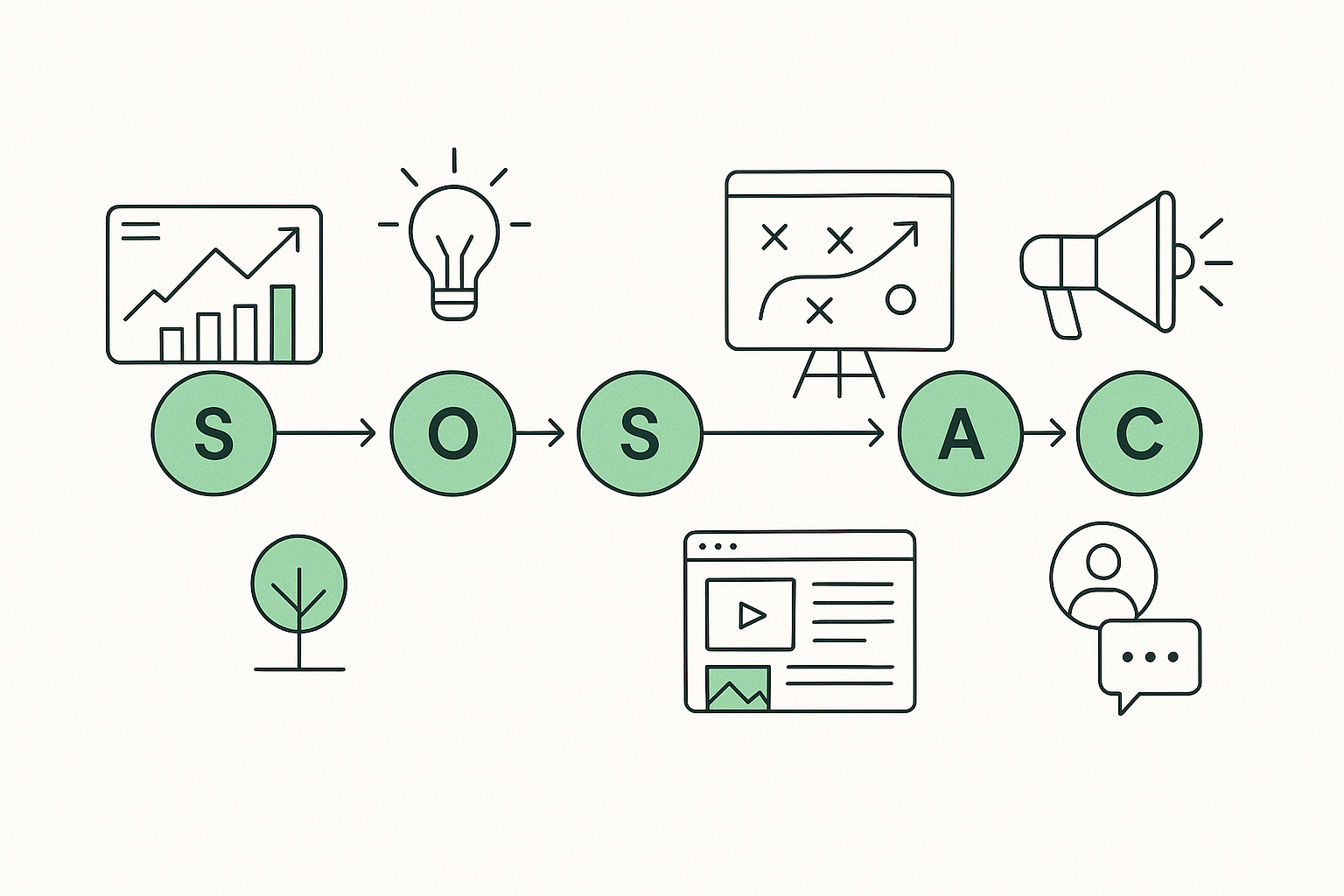
SOSTAC® is a widely used marketing planning framework developed by PR Smith. The name is an acronym for six key stages of planning:
- S – Situation Analysis
- O – Objectives
- S – Strategy
- T – Tactics
- A – Action
- C – Control
SOSTAC® provides a clear roadmap that links analysis to execution and performance measurement.
Why SOSTAC® Is Important in Digital Marketing
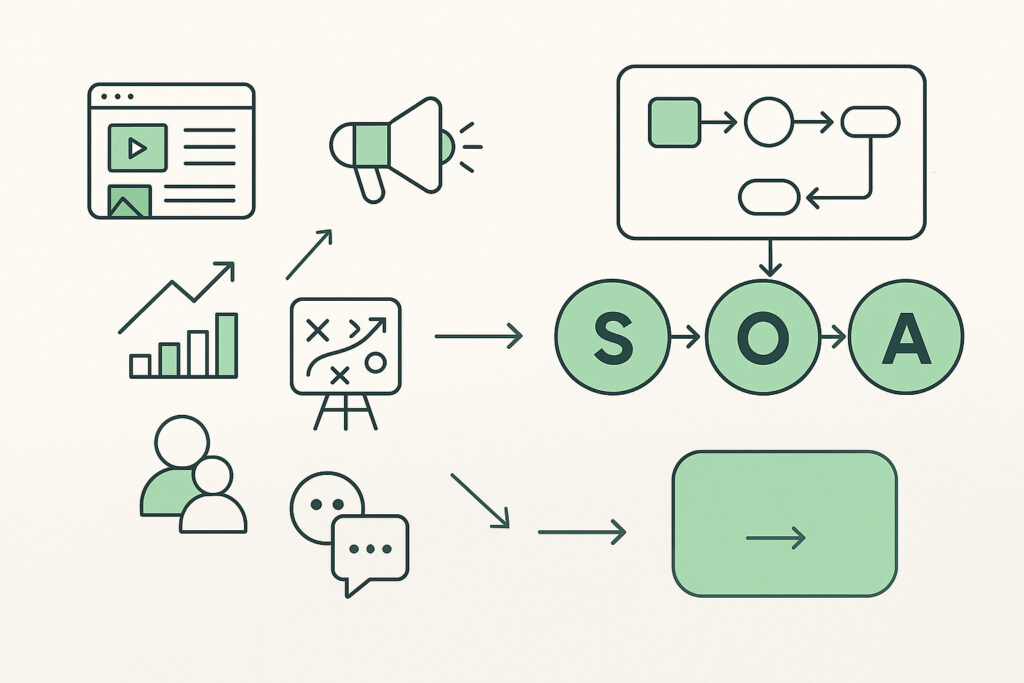
Digital marketing involves multiple channels, platforms, tools, and stakeholders. Without structure, efforts become fragmented.
SOSTAC® helps marketers:
- Understand where they are today
- Define where they want to go
- Decide how to get there
- Execute consistently
- Measure and optimise results
It is suitable for B2B, B2C, SaaS, e-commerce, and SMEs.
S – Situation Analysis: Where Are We Now?

Purpose
To understand the current internal and external environment before making decisions.
Key Areas to Analyse
- Market trends and customer behaviour
- Competitor performance and positioning
- Current digital channels and traffic sources
- Strengths, weaknesses, opportunities, threats (SWOT)
- Existing KPIs and performance data
Digital Marketing Focus
- Website performance
- SEO rankings
- Social media engagement
- Email list health
- Conversion rates
Practical Example
A digital agency analyses:
- Organic traffic declining due to outdated content
- Strong email open rates but low click-through rates
- Competitors investing heavily in video marketing
This analysis highlights where improvement is needed and where opportunities exist.
O – Objectives: Where Do We Want to Be?
Purpose
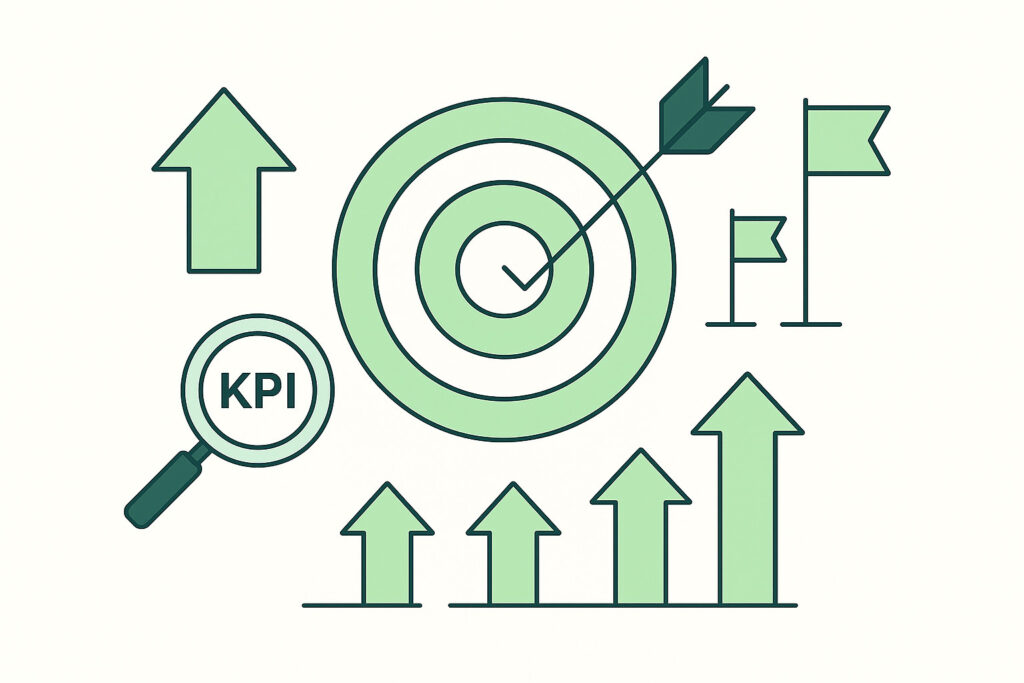
To set clear, measurable goals aligned with business outcomes.
Objectives should follow the SMART principle:
- Specific
- Measurable
- Achievable
- Relevant
- Time-bound
Common Digital Marketing Objectives
- Increase website traffic by 30 percent in 6 months
- Generate 500 qualified leads per quarter
- Improve conversion rate from 2 percent to 3.5 percent
- Reduce cost per acquisition by 20 percent
Practical Example
Objective:
Increase inbound leads by 40 percent within 12 months through content marketing and paid search.
S – Strategy: How Do We Get There?

Purpose
To define the high-level approach for achieving the objectives.
Strategy focuses on direction, not execution details.
Key Strategic Decisions
- Target audience and personas
- Value proposition and positioning
- Channel mix (SEO, paid ads, social, email)
- Customer journey mapping
- Content and engagement approach
Practical Example
Strategy may include:
- Targeting SMEs in professional services
- Positioning as an educational, trust-based brand
- Focusing on SEO, LinkedIn, and email nurturing
- Using long-form content to support buyer decision-making
T – Tactics: What Tools and Activities Will We Use?

Purpose
To translate strategy into specific marketing activities.
Tactics are detailed, channel-specific actions.
Examples of Digital Marketing Tactics
- Publish two SEO-optimised blog posts per week
- Run Google Search and LinkedIn Ads
- Create lead magnets such as guides and checklists
- Use marketing automation for email campaigns
- Retarget website visitors with display ads
Practical Example
For lead generation:
- Launch a downloadable industry report
- Promote it via paid social and email
- Create dedicated landing pages with A/B testing
A – Action: Who Does What and When?

Purpose
To ensure the plan is executed effectively.
Action focuses on resources, responsibilities, and timelines.
Key Considerations
- Team roles and ownership
- Budget allocation
- Marketing calendar
- Technology and tools
- Training and processes
Practical Example
- Content manager publishes weekly blogs
- Designer produces visual assets
- Marketing manager reviews KPIs monthly
- CRM and analytics tools track performance
Without this step, even the best plan will fail.
C – Control: How Do We Measure and Improve?

Purpose
To monitor performance and optimise continuously.
Control ensures accountability and learning.
Key Metrics
- Traffic, engagement, and conversions
- Cost per lead and acquisition
- ROI by channel
- Customer lifetime value
- Funnel performance
Tools Commonly Used
- Google Analytics
- CRM systems
- Marketing automation platforms
- Dashboard reporting tools
Practical Example
Monthly reviews reveal:
- Paid ads performing well but SEO underperforming
- High-performing content topics worth expanding
- Budget reallocation opportunities
How SOSTAC® Works with Other Frameworks
SOSTAC® is often combined with:
- RACE for customer lifecycle planning
- AARRR for growth metrics
- STP for segmentation and targeting
SOSTAC® provides the planning structure, while other frameworks support execution.
Final Thoughts

The SOSTAC® framework brings clarity, discipline, and accountability to digital marketing planning.
By answering six simple questions:
- Where are we now
- Where do we want to be
- How do we get there
- What tools will we use
- Who will do what
- How will we measure success
businesses can move from ad-hoc marketing to structured, results-driven growth.
Leave a Reply