

Keyword research is the foundation of SEO. If you target the wrong keywords, even the best content will not rank or attract the right audience.
This tutorial explains what keyword research is, why it matters, and how to do it step by step, with practical examples you can apply immediately.
What Is Keyword Research?

Keyword research is the process of identifying the words and phrases people type into search engines when looking for information, products, or services.
In SEO, keywords help you understand:
- What your audience is searching for
- How often they search for it
- How competitive those searches are
- What type of content they expect
Good keyword research ensures your content matches real search demand, not assumptions.
Why Keyword Research Matters
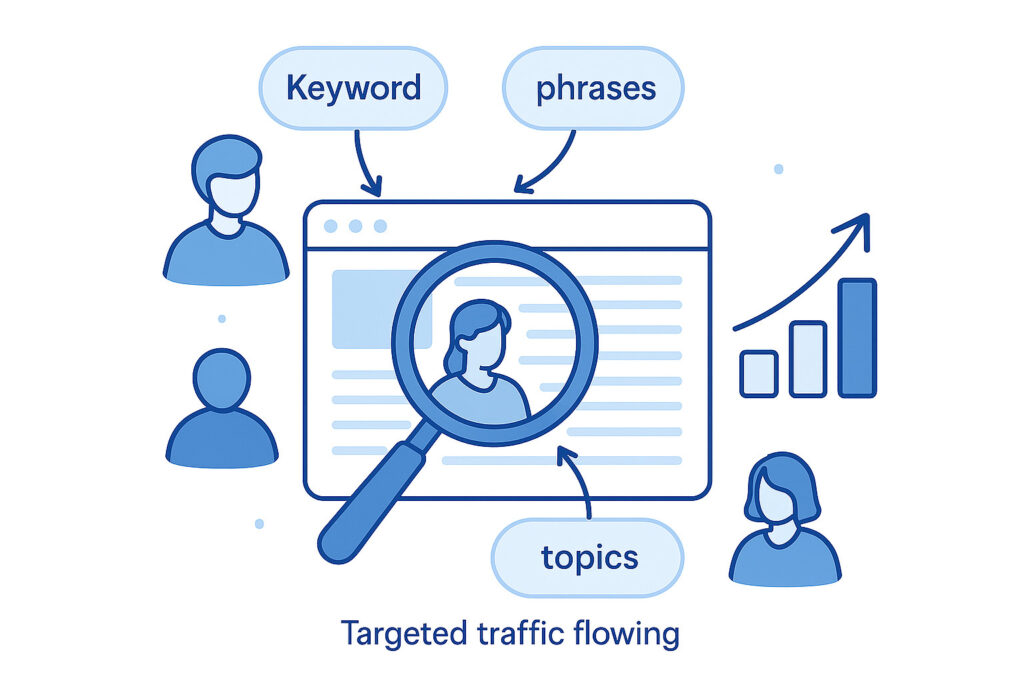
Keyword research helps you:
- Attract relevant and qualified traffic
- Create content people actually want
- Improve ranking potential
- Understand customer problems and intent
- Prioritise content ideas effectively
Without keyword research, SEO becomes guesswork.
Types of Keywords You Need to Know
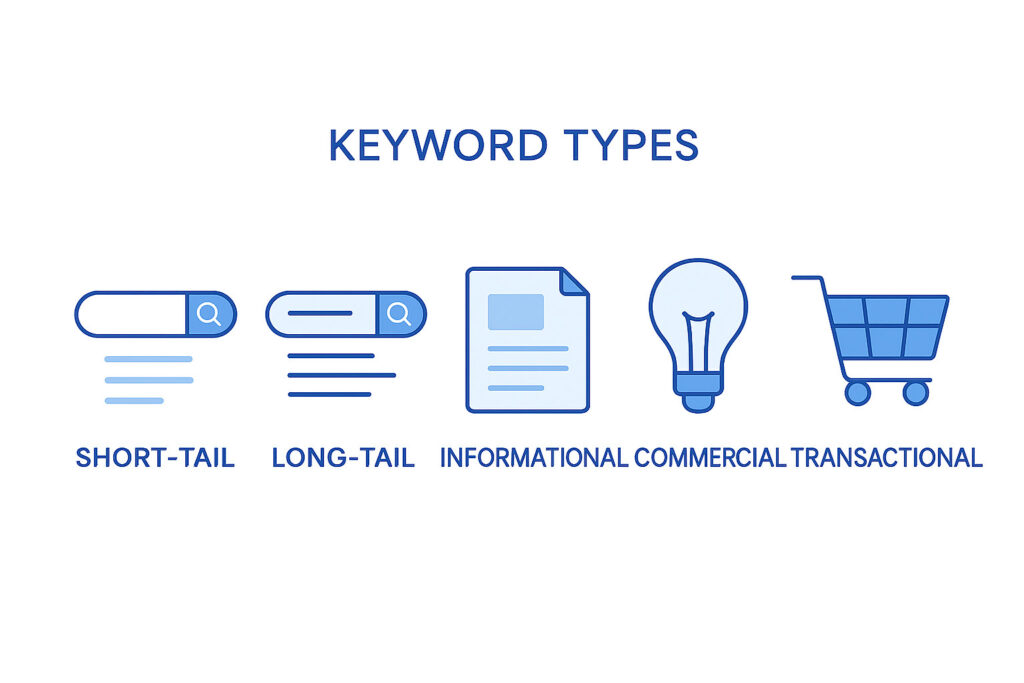
Understanding different keyword types helps you choose the right targets.
Short-Tail Keywords
- Broad and generic
- High search volume
- Very competitive
Example: digital marketing
Long-Tail Keywords
- More specific phrases
- Lower volume but higher intent
- Easier to rank for
Example: digital marketing strategies for small businesses
Informational Keywords
- Users looking to learn
Example: what is keyword research
Commercial Keywords
- Users comparing options
Example: best SEO tools for beginners
Transactional Keywords
- Users ready to act or buy
Example: SEO services pricing
Step-by-Step Keyword Research Process
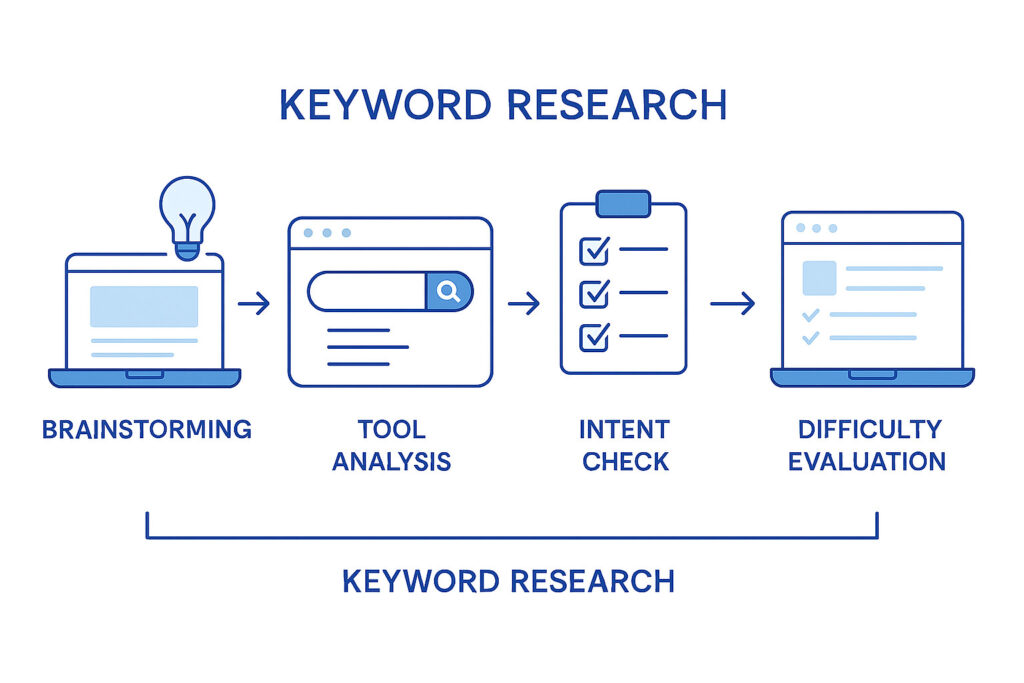
Step 1: Define Your Topic and Audience
Before using any tool, be clear about:
- Your business or website focus
- Your target audience
- Their problems and goals
Example:
If your audience is small business owners, focus on keywords related to growth, cost, and efficiency.
Step 2: Brainstorm Seed Keywords
Seed keywords are basic terms related to your topic.
Example for SEO tutorials:
- SEO
- keyword research
- on-page SEO
- Google ranking
These act as starting points for deeper research.
Step 3: Use Keyword Research Tools
Popular tools help you discover keyword ideas and data.
Common Tools
- Google Keyword Planner
- Google Search Console
- Ahrefs
- SEMrush
- Ubersuggest
These tools provide:
- Search volume
- Keyword difficulty
- Related keyword suggestions
Step 4: Analyse Search Intent
Search intent answers why someone is searching.
Ask:
- Are they learning?
- Are they comparing?
- Are they ready to buy?
Example:
Keyword: keyword research tutorial
Intent: Informational
Best content: Step-by-step guide (like this one)
Matching intent is critical for ranking success.
Step 5: Evaluate Keyword Difficulty
Keyword difficulty shows how hard it is to rank.
Consider:
- Domain authority of top-ranking pages
- Content quality on page one
- Backlink profiles
For newer sites, prioritise:
- Long-tail keywords
- Low to medium competition
Step 6: Check SERP Features
Search results often include:
- Featured snippets
- People Also Ask
- Videos
- Local packs
Understanding SERP layout helps you design content that fits.
Step 7: Build a Keyword List and Prioritise
Create a list with:
- Keyword
- Search intent
- Difficulty
- Content type
Prioritise keywords that:
- Match your audience
- Fit your site authority
- Support your business goals
Practical Example: Keyword Research in Action

Scenario:
You run a digital marketing blog.
Goal:
Create an SEO tutorial series.
Process:
- Start with seed keyword “keyword research”
- Expand into:
- keyword research tutorial
- keyword research for beginners
- how to do keyword research for SEO
- Analyse intent: informational
- Check competition: medium
- Choose “keyword research tutorial” as the main keyword
- Support with related keywords in headings and content
How to Use Keywords in Content
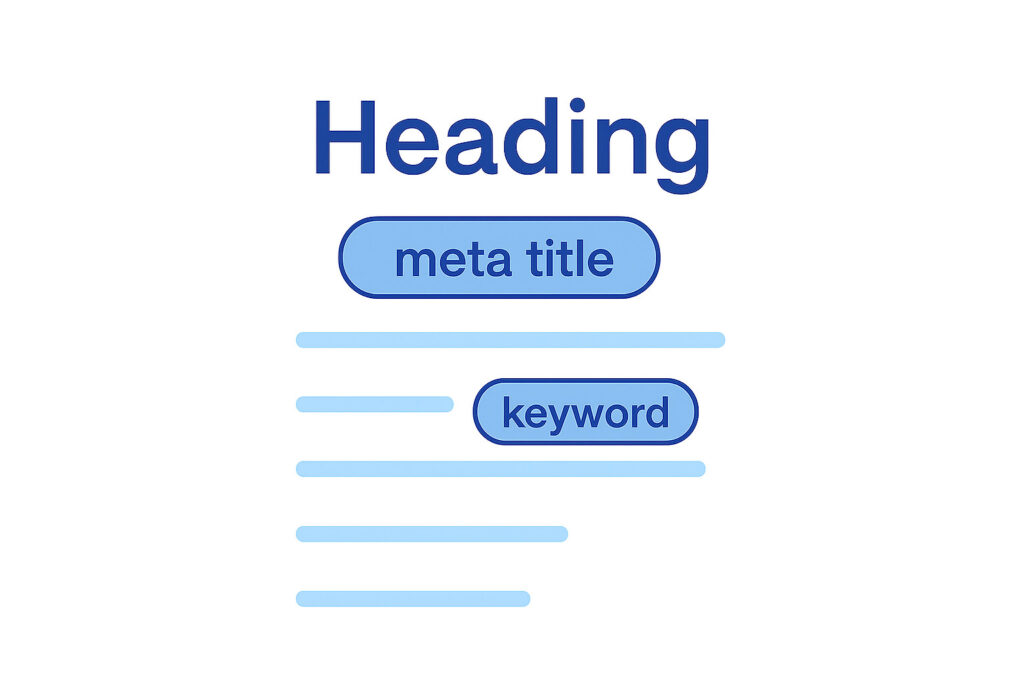
Once you select keywords:
- Use the main keyword in the title
- Include it naturally in headings
- Add related keywords in body text
- Optimise meta title and description
- Avoid keyword stuffing
SEO today is about natural relevance, not repetition.
Common Keyword Research Mistakes
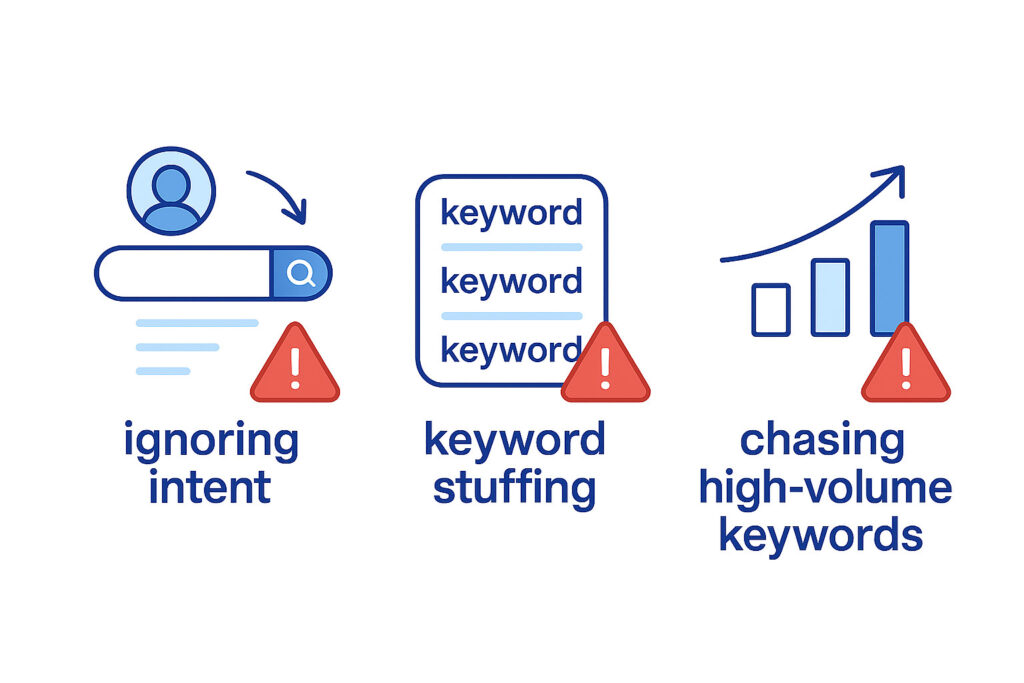
- Chasing high-volume keywords only
- Ignoring search intent
- Targeting too many keywords per page
- Using outdated keyword data
- Forgetting about user value
Tools vs Human Judgment
Keyword tools provide data, but judgment matters more.
Always ask:
- Does this keyword match user needs?
- Can my content genuinely help?
- Does it align with my business goals?
Final Thoughts
Keyword research is not about finding the most popular keywords. It is about finding the right keywords.
When done correctly, keyword research:
- Guides content creation
- Improves ranking potential
- Attracts qualified traffic
- Strengthens long-term SEO performance
Master this skill, and every future SEO activity becomes more effective.
Leave a Reply