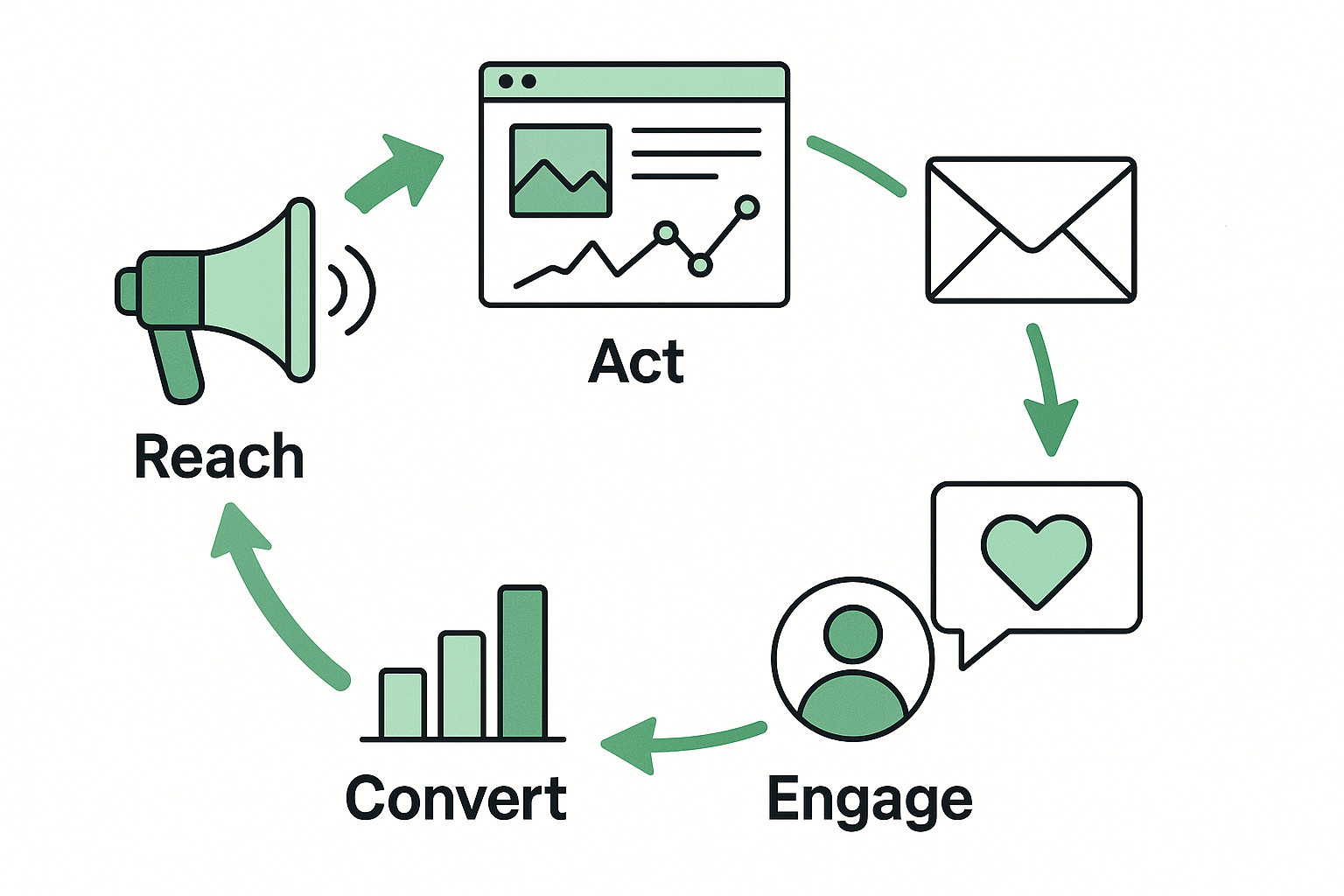
Digital marketing often fails not because of poor tools or lack of budget, but because of poor structure. Teams run ads, post on social media, send emails, and publish content without a clear system to connect everything together.
The RACE Framework solves this problem by providing a simple, customer-centric structure for planning, executing, and measuring digital marketing activities.
In this guide, you’ll learn:
- What the RACE Framework is
- How each stage works
- Key channels, metrics, and tactics for every stage
- Practical examples you can apply immediately
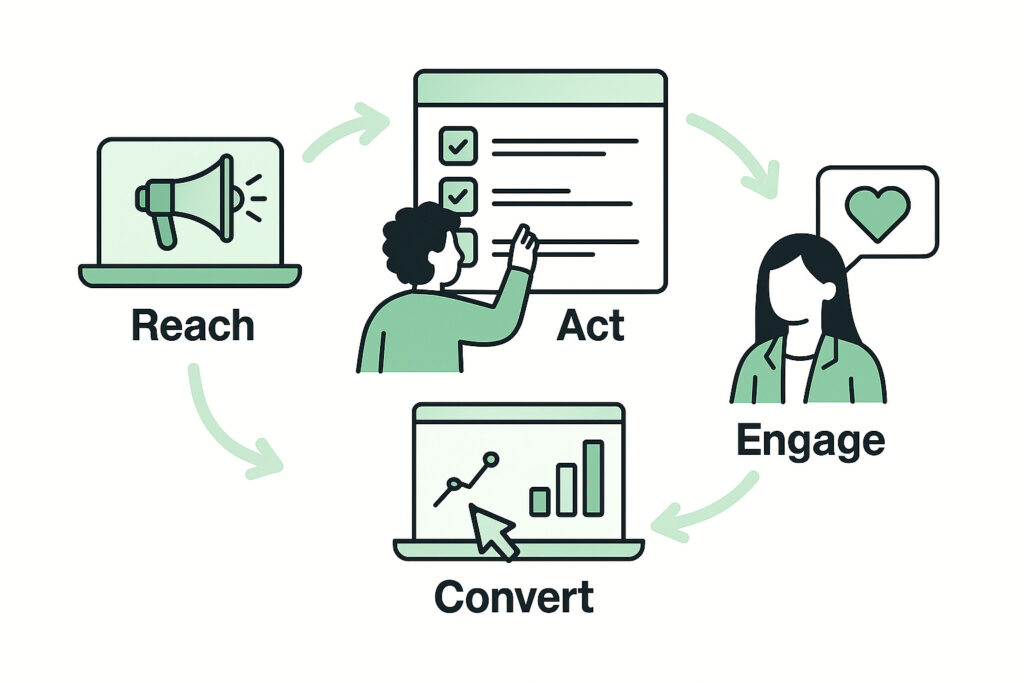
What Is the RACE Framework?
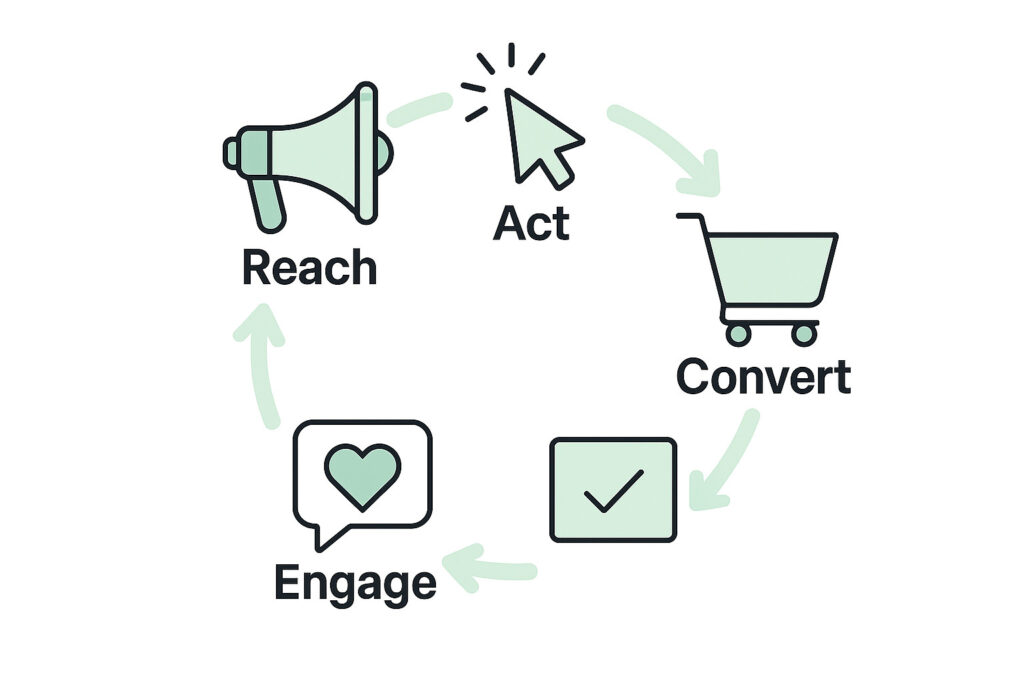
RACE stands for:
- R – Reach
- A – Act
- C – Convert
- E – Engage
It is a lifecycle-based digital marketing framework that maps marketing activities to the customer journey, from first contact to long-term loyalty.
Unlike channel-based planning (SEO, ads, social, email), RACE focuses on what the customer needs to do next, and how digital marketing supports that action.
Why the RACE Framework Is Useful
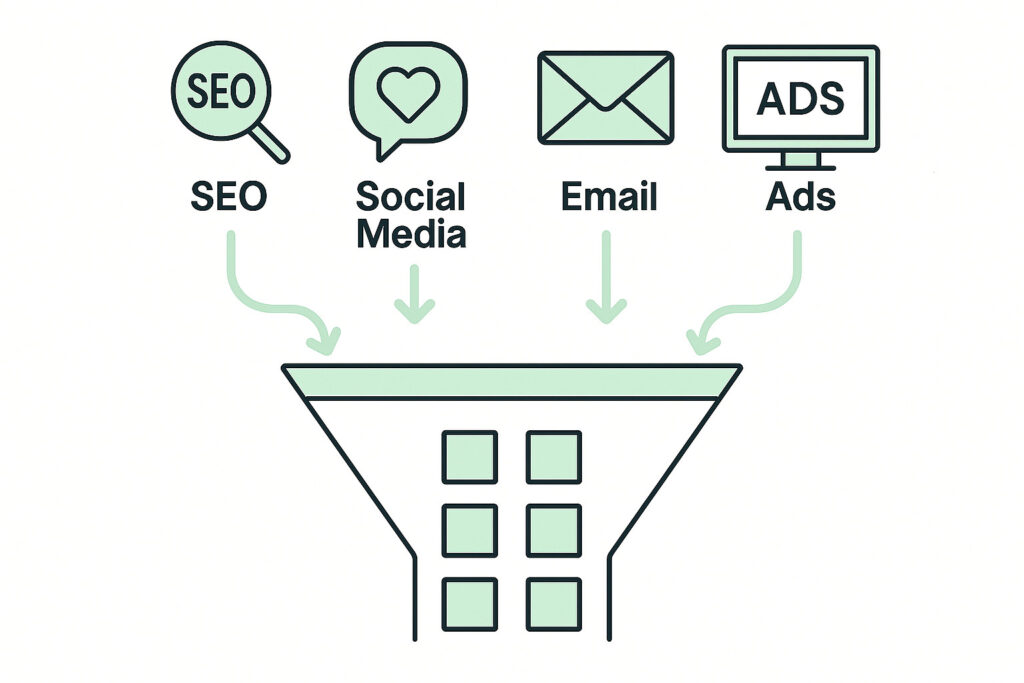
The RACE Framework helps businesses:
- Align marketing activities with business goals
- Avoid random or disconnected campaigns
- Improve conversion rates at every stage
- Measure performance more meaningfully
- Create better customer experiences
It works for B2B, B2C, e-commerce, SaaS, and service-based businesses.
Stage 1: Reach – Build Awareness and Visibility
Objective
To reach the right audience and drive qualified traffic to your digital platforms.
This stage focuses on brand visibility and initial discovery.
Common Channels
- Search engines (SEO and PPC)
- Social media (organic and paid)
- Display and video advertising
- Influencer and partnership marketing
- Online PR and content distribution
Key Metrics
- Website sessions
- Impressions and reach
- Click-through rate (CTR)
- Cost per click (CPC)
- New users
Practical Example
A SaaS accounting platform wants to attract small business owners.
Reach activities may include:
- Publishing SEO blog articles like “Best Accounting Software for SMEs”
- Running Google Search Ads for “cloud accounting software”
- Posting short educational videos on LinkedIn
- Collaborating with accounting influencers for content
Goal: Get the right audience to visit the website for the first time.
Stage 2: Act – Encourage Interaction and Consideration
Objective
To encourage users to take meaningful actions that show interest, such as:
- Reading content
- Downloading resources
- Subscribing to newsletters
- Exploring product pages
This stage is about engagement before purchase.
Common Tactics
- Lead magnets (eBooks, guides, checklists)
- Interactive content (calculators, quizzes)
- Landing pages
- Email sign-ups
- Product comparison pages
Key Metrics
- Bounce rate
- Pages per session
- Time on site
- Lead conversion rate
- Micro-conversions (downloads, sign-ups)
Practical Example
Continuing the SaaS example:
After users land on the website, the company:
- Offers a free bookkeeping checklist in exchange for email sign-up
- Shows a product comparison page vs competitors
- Uses clear CTAs like “See How It Works” or “Try the Demo”
Goal: Turn anonymous visitors into leads or engaged prospects.
Stage 3: Convert – Turn Leads Into Customers
Objective
To convert interested prospects into paying customers.
This stage focuses on sales enablement and trust-building.
Common Tactics
- Free trials or demos
- Email nurturing sequences
- Retargeting ads
- Testimonials and case studies
- Pricing and onboarding pages
Key Metrics
- Conversion rate
- Cost per acquisition (CPA)
- Sales-qualified leads (SQLs)
- Revenue generated
- Trial-to-paid conversion rate
Practical Example
For the same SaaS platform:
Conversion strategies may include:
- A 14-day free trial with guided onboarding emails
- Retargeting ads reminding users to complete sign-up
- Case studies showing how similar businesses saved time and money
- A transparent pricing page with FAQs
Goal: Reduce friction and give prospects confidence to buy.
Stage 4: Engage – Build Loyalty and Long-Term Value
Objective
To retain customers, encourage repeat usage, and turn customers into advocates.
Engagement does not end at the sale. This stage drives lifetime value.
Common Tactics
- Email newsletters
- Product updates and tips
- Loyalty programs
- Customer communities
- Surveys and feedback loops
- Upsell and cross-sell campaigns
Key Metrics
- Customer retention rate
- Repeat purchase rate
- Customer lifetime value (CLV)
- Net Promoter Score (NPS)
- Email engagement metrics
Practical Example
Post-purchase, the SaaS company:
- Sends monthly emails with accounting tips
- Provides in-app tutorials and feature updates
- Invites users to webinars and online communities
- Offers referral incentives for recommending others
Goal: Keep customers engaged, satisfied, and loyal.
How the RACE Framework Works as a System
The key strength of RACE is that each stage supports the next:
- Reach without Act leads to wasted traffic
- Act without Convert leads to lost opportunities
- Convert without Engage leads to churn
By planning marketing activities across all four stages, businesses create a balanced and sustainable digital strategy.
How to Apply RACE in Practice
A simple way to start:
- Map your current marketing activities to each RACE stage
- Identify gaps (e.g. strong Reach but weak Convert)
- Set 1–2 clear KPIs per stage
- Improve one stage at a time
This approach keeps your digital marketing focused, measurable, and customer-driven.
Final Thoughts
The RACE Framework is not about adding more marketing activities. It is about organising what you already do in a smarter way.
By focusing on:
- Visibility (Reach)
- Interaction (Act)
- Sales (Convert)
- Loyalty (Engage)
you can create a digital marketing strategy that drives real business outcomes, not just traffic or likes.
Leave a Reply